
Monophyllaea horsfieldii
Monophyllaea horsfieldii
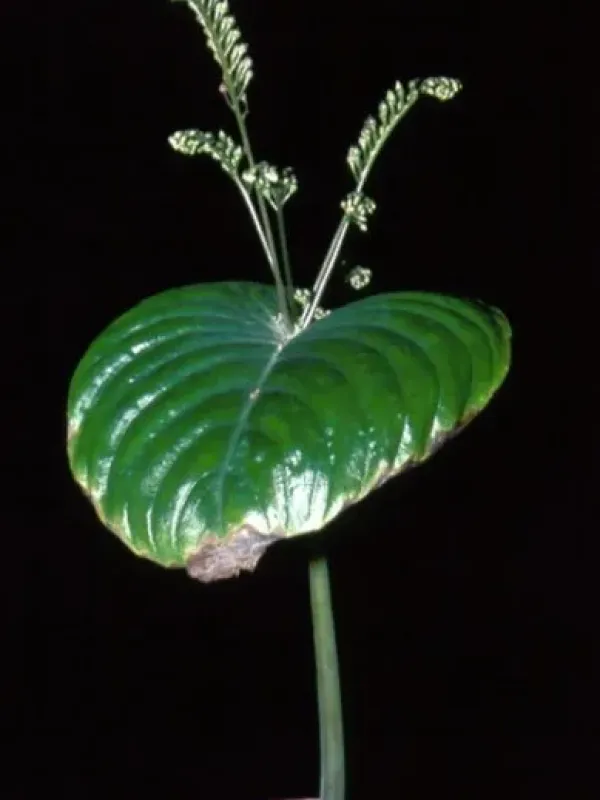
Description
Growing requirements
Monophyllaea horsfieldii is a fascinating species belonging to the Gesneriaceae family, native to the tropical regions of Southeast Asia. This plant is well-known among botanists for its peculiar growth habit, where the plant body typically consists of a single large leaf developing directly from the cotyledon.
The cultivation of this species requires strict adherence to tropical environmental conditions. It thrives in high-humidity habitats with consistent temperatures, typically ranging between 22°C and 28°C, and cannot tolerate freezing or extreme heat stress.
The substrate must be highly porous and well-draining to prevent root rot. A mixture containing organic debris, moss, and perlite is recommended to simulate the natural rock crevices and forest floor environments where this plant usually anchors itself in the wild.
Proper light management is critical for the success of this crop. The plant requires filtered, indirect sunlight, as its foliage is highly susceptible to tissue damage when exposed to intense direct radiation. Shaded environments in greenhouse settings are optimal.
In terms of agricultural and horticultural use, Monophyllaea horsfieldii is primarily managed as an ornamental specialty or a study object in biological research. Its unique morphology makes it a significant asset for botanical conservatories focused on rare tropical plant diversity.