
Monochasma sheareri
Monochasma sheareri
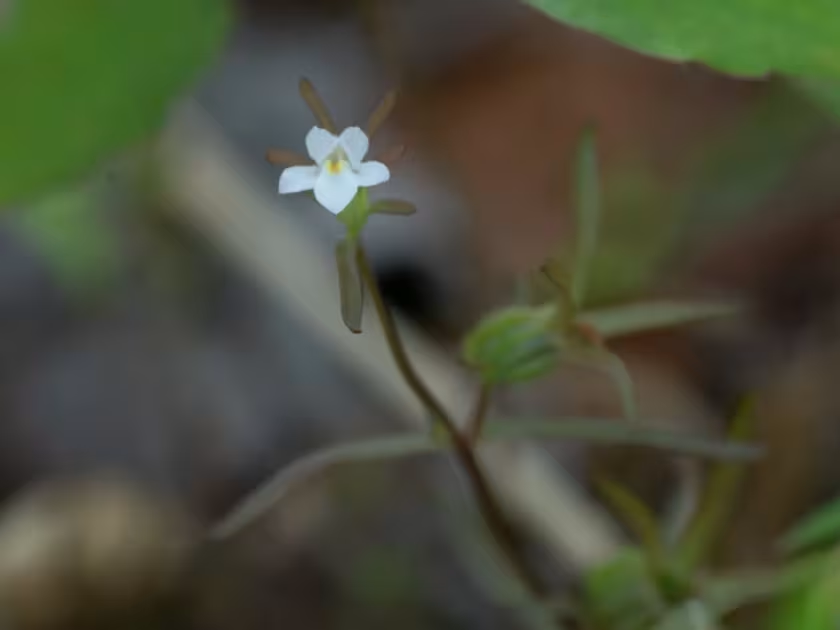
Description
Sowing dates
The plant belongs to hemiparasitic species, therefore its sowing or introduction into culture requires the presence of specific host plants. In natural conditions, seeds germinate in close proximity to the root systems of certain herbaceous species on which Monochasma parasitizes.
Under experimental or specialized cultivation conditions, seeds are sown in the autumn. This is necessary for stratification in natural soil temperature regimes, which significantly increases the germination rate of seeds in the spring.
Special attention is paid to the depth of seed burial, which should be minimal due to the very small size of the seeds. During cultivation, it is important to ensure the contact of the seedling with the roots of the host plant during the earliest phases of development.
Field preparation involves clearing the soil of competitive weeds that can suppress the growth of young shoots. In agronomy, it is often practiced to sow in areas with an existing cover of suitable species to ensure the crop's nutrition from the very first day.
Watering after sowing should be moderate, avoiding soil waterlogging, which could provoke seed rot before the attachment to the host roots occurs.
Growing requirements
Monochasma sheareri prefers to grow in open, well-lit areas on slopes or in sparse grassland communities. The optimal environment consists of moderately dry, well-drained soils with a neutral or slightly acidic reaction.
The plant is sensitive to excess moisture, so the choice of site for its cultivation should exclude lowlands and stagnant rainwater. An important condition for survival is the presence of available nutrients in the soil, which the plant obtains both through autotrophic photosynthesis and via haustoria attached to host roots.
The climatic conditions of its range include pronounced seasonality with warm, humid summers and relatively cool winters. Monochasma is quite resistant to short-term temperature fluctuations characteristic of the mountainous regions of East Asia.
Soil structure should provide good aeration for the root system, which is crucial for the normal functioning of the plant's parasitic feeding mechanism. Dense clay soils are not suitable for this species.
Agrotechnical requirements also include limiting the application of high doses of nitrogen fertilizers, which can disrupt the natural balance between the parasite and the host plant.
Main diseases and pests
The main threat to this crop is the change in ecological balance in the areas where it grows. The loss of host plants inevitably leads to the death of Monochasma, as it is unable to develop fully without an external source of nutrition.
Pests that affect the aerial parts of the plant include various species of leaf beetles and aphids, which can significantly reduce its aesthetic value and the accumulation of biologically active substances. However, mass outbreaks of pests on this plant are rarely reported.
Diseases are most often fungal in nature and occur when humidity levels in the air and soil are disturbed. Root rot becomes a critical factor during periods of prolonged rain, leading to the death of the root system.
The anthropogenic factor, such as uncontrolled harvesting of wild specimens, is the primary threat to the population. Overgrazing by livestock in areas of growth also negatively affects the condition of young plants.
Competition from invasive weed species can displace Monochasma from its natural habitats, as it loses out in the struggle for sunlight and nutrient resources.
Harvesting
The harvesting of raw material is carried out during the period of active flowering, when the concentration of useful substances in the aerial part reaches maximum levels. This usually occurs in the summer months, starting from mid-June to the end of August.
For harvesting, sharp knives or sickles are used to cut the shoots at some distance from the soil surface. It is important to leave a portion of the root system and the base of the shoot to allow for potential regeneration of the population in the following season.
After harvest, the plant material undergoes thorough cleaning to remove foreign impurities and soil. The drying process is carried out in the shade in well-ventilated rooms, which allows for the preservation of biologically active components and the plant's natural color.
Storage of dried material requires protection from direct sunlight and high humidity. It is recommended to use paper or fabric packaging, which prevents clumping and ensures air circulation.
In traditional medicine, both aerial parts and sometimes the root system are valued; therefore, during harvesting, it is important to adhere to regulated timelines so as not to cause irreparable damage to natural resource reserves.