
One-flowered wintergreen
Moneses uniflora
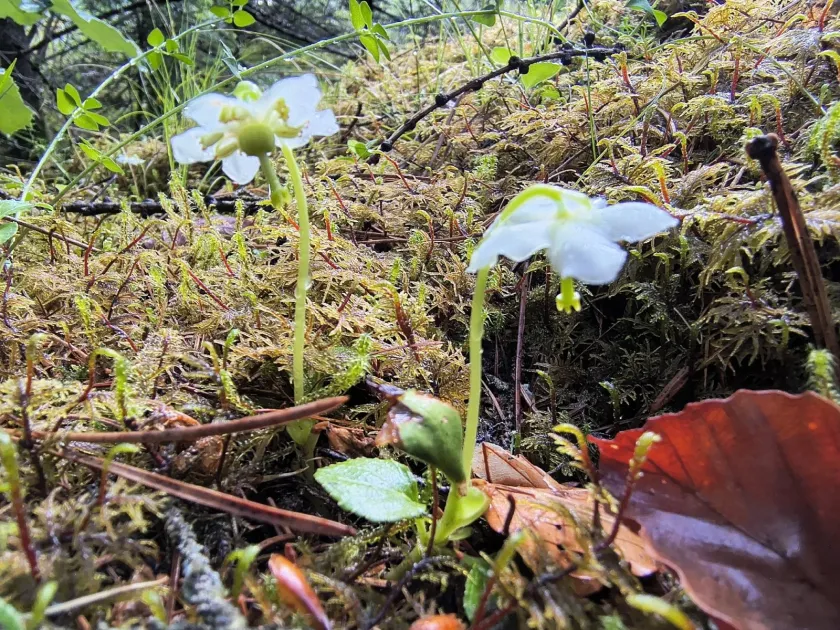
Description
Growing requirements
One-flowered wintergreen, known botanically as Moneses uniflora, is a delicate perennial plant belonging to the Ericaceae family. It is typically found in mature coniferous forests, where it thrives in shaded, moist environments with thick organic forest floor litter.
The native range of this species extends across the circumboreal regions of the Northern Hemisphere, spanning from Europe through Siberia to the northern parts of North America. It is a highly specialized plant that requires a stable forest climate.
Its botanical structure includes a small rosette of evergreen leaves and a single, nodding, fragrant flower. The plant maintains a complex symbiotic relationship with mycorrhizal fungi, which makes it extremely difficult to cultivate in conventional garden or field settings.
Requirements for growth include highly acidic, organic-rich soil that remains consistently moist. The plant is extremely sensitive to changes in humidity and temperature, making it unsuitable for standard agricultural practices or commercial cultivation.
In terms of usage, it has historical significance in traditional herbal remedies. However, because it is not a traditional agricultural crop, its study is focused more on ecological preservation than on agronomic production or yield improvement.
Main diseases and pests
The primary threat to the species is habitat fragmentation and destruction. Logging and urban development disrupt the specific microclimates and soil conditions necessary for the plant and its fungal partners to survive.
Pathogenic threats are primarily related to fungal infections in the roots or foliage, especially when environmental conditions deviate significantly from the species' natural forest ecosystem needs.
Insects and generalist herbivores can cause occasional damage to the leaves, although the presence of chemical defensive compounds in the plant tissues usually keeps predation levels relatively low.
Climate change poses a long-term risk, as rising temperatures and shifting precipitation patterns can cause the desiccation of the sensitive moss and humus layers where the plant establishes itself.
Competition from more aggressive, non-specialized herbaceous plants can displace Moneses uniflora, as it is a slow-growing species that cannot rapidly adapt to disturbed ground conditions.