
Monanthes lowei
Monanthes lowei
Description
Growing requirements
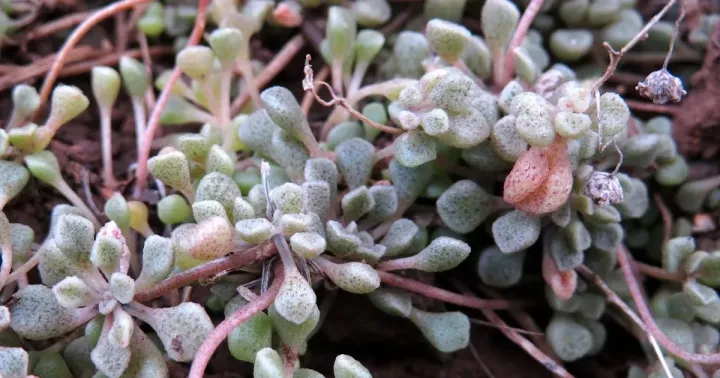
Monanthes lowei is a succulent perennial plant belonging to the Crassulaceae family. Native to the island of Madeira, this species has adapted to extreme conditions, often growing in rocky crevices where soil availability is minimal but drainage is excellent.
Botanically, the plant features dense, miniature rosettes of fleshy leaves that form low-growing, mat-like clusters. These structures are highly specialized for water storage, allowing the plant to thrive in dry, rocky environments with intense solar exposure.
The cultivation of Monanthes lowei requires bright, indirect light to maintain its compact growth form. If the light is too dim, the plant will become etiolated, losing its characteristic rosette shape. Protection from harsh midday sun is essential to prevent leaf scorching.
Soil requirements are strict, focusing on porosity and drainage. A standard succulent mix incorporating a high percentage of grit, pumice, or coarse sand is recommended to ensure that water never sits around the delicate root system, which is prone to rot.
Watering practices should be conservative. It is crucial to allow the substrate to dry out completely between waterings. During the winter dormancy period, the plant requires very little moisture to survive, and overwatering at this time is the most common cause of plant failure.
Main diseases and pests
The primary threats to Monanthes lowei are fungal pathogens related to overwatering and high humidity. Root rot, caused by stagnant moisture in the root zone, can be fatal. Ensuring good airflow is the most effective preventive measure against these conditions.
Mealybugs are the most common pests found on Monanthes lowei. These small insects tend to hide between the tightly packed leaves, making them difficult to detect. Regular inspection of the plant's center is recommended to catch infestations early.
Spider mites may also affect the plant, particularly in conditions with low humidity. These pests feed on the sap of the leaves, causing discoloration and eventual tissue death. Treatment involves applying systemic acaricides that are specifically safe for succulents.
Fungal issues, such as leaf spot or stem decay, should be managed by removing affected rosettes and repotting the healthy parts of the plant into sterile, dry substrate. Fungicidal applications can assist, but cultural control remains the most critical aspect.
Good hygiene in the growing area is vital. Removing dead, shriveled leaves from the base of the rosettes helps to prevent the growth of mold and keeps the plant surface aerated, reducing the risk of opportunistic fungal infections.