
Pongamia pinnata
Millettia pinnata (L.) Panigrahi
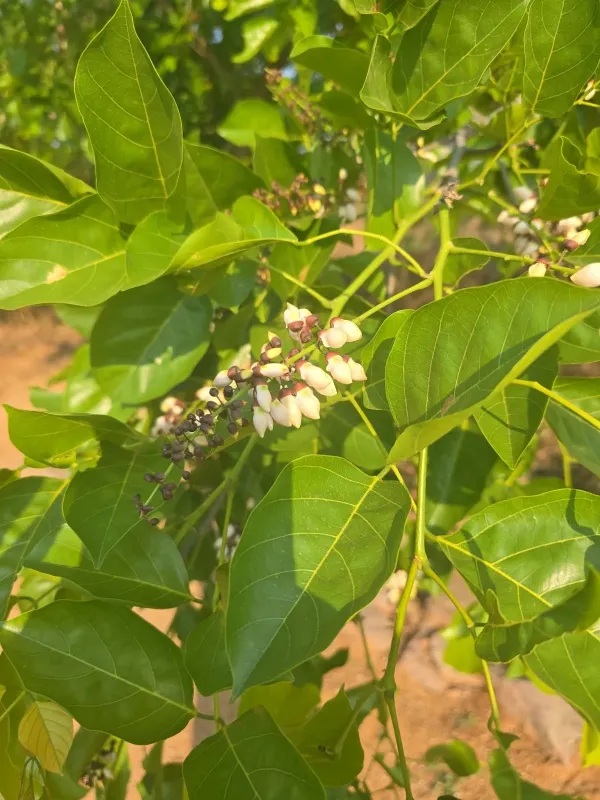
Description
Sowing dates
Seeds of Millettia pinnata should be sown at the beginning of the rainy season to ensure optimal germination and seedling establishment in the soil. Given their hard seed coat, scarification or overnight soaking in water is highly recommended to improve the germination rate.
In nursery settings, seeds are planted in well-drained containers, maintaining constant moisture and temperatures between 25 and 30 degrees Celsius for successful growth.
Transplanting to the field is performed once the saplings reach a height of 30–50 centimeters, which typically occurs after several months of dedicated greenhouse care.
When establishing commercial plantations, a spacing of 5x5 to 10x10 meters is suggested to allow for proper canopy development and efficient harvesting operations later on.
During the first few years, young trees require regular weeding and irrigation to support root development until they become self-sufficient in harsh tropical environments.
Growing requirements
Millettia pinnata is a member of the Fabaceae family, celebrated for its remarkable resilience and ability to thrive in diverse and challenging environmental conditions.
The tree is well-adapted to tropical climates, handling both high humidity and moderate drought periods thanks to its extensive and deep root system that anchors the plant firmly.
It has minimal soil requirements, growing effectively in sandy, rocky, or saline soils where other crops might fail, often acting as a pioneer species for land reclamation.
This species is highly heliophilic and requires full solar exposure to maximize flowering and seed production, thus avoiding shaded areas in the plantation landscape.
While the tree is drought-tolerant, it performs best in well-drained locations, as waterlogging can damage the roots and hinder the beneficial nitrogen-fixing symbiosis.
Yield
The primary agricultural output of this crop is its seeds, which contain 30–40% non-edible oil, serving as a high-potential feedstock for the global biodiesel industry.
Trees typically begin to bear fruit between 4 and 7 years after planting, with peak productivity reached around the 10–12 year mark and continuing for several decades.
An average mature tree can yield between 10 and 50 kilograms of seeds annually, making high-density cultivation a viable economic strategy for sustainable energy projects.
Beyond oil production, the tree generates significant biomass, which can be utilized as green manure, organic mulch, or as a source of raw material for fiber industries.
The nitrogen-fixing capabilities of the plant also improve soil health, potentially increasing the yields of intercropped species within agroforestry systems.
Main diseases and pests
Common diseases affecting Millettia pinnata include various fungal infections, such as powdery mildew and leaf spots, which thrive in high-humidity microclimates.
Insect pests, including leaf-eating caterpillars and certain stem-boring beetles, can cause localized damage, reducing the photosynthetic capacity of the canopy.
Effective management includes regular pruning to improve airflow through the canopy, which naturally suppresses fungal growth and minimizes the hiding spots for pests.
When pest populations exceed economic thresholds, integrated pest management practices, including biological control agents, should be employed to protect the tree health.
Monitoring the trees during the flowering and pod-forming stages is critical, as these phases are most vulnerable to insect predation and environmental stress.
Harvesting
The harvesting process starts when the seed pods turn brown and dry, indicating that the seeds have reached their peak oil content and the moisture level has dropped.
Pods are typically sun-dried to facilitate easier seed extraction, followed by manual or mechanical threshing to separate the seeds from the protective husks.
Stored seeds must be kept in well-ventilated, dry conditions to prevent the degradation of oil quality and to stop the growth of storage fungi or mold contamination.
Timely harvesting is essential, as pods left on the tree too long may shatter or be damaged by moisture, leading to significant yield losses before collection can occur.
Quality control during harvest—specifically separating mature pods from green or damaged ones—is vital to ensure high-grade oil extraction and prevent acidity issues.