
Microstachys chamaelea
Microstachys chamaelea
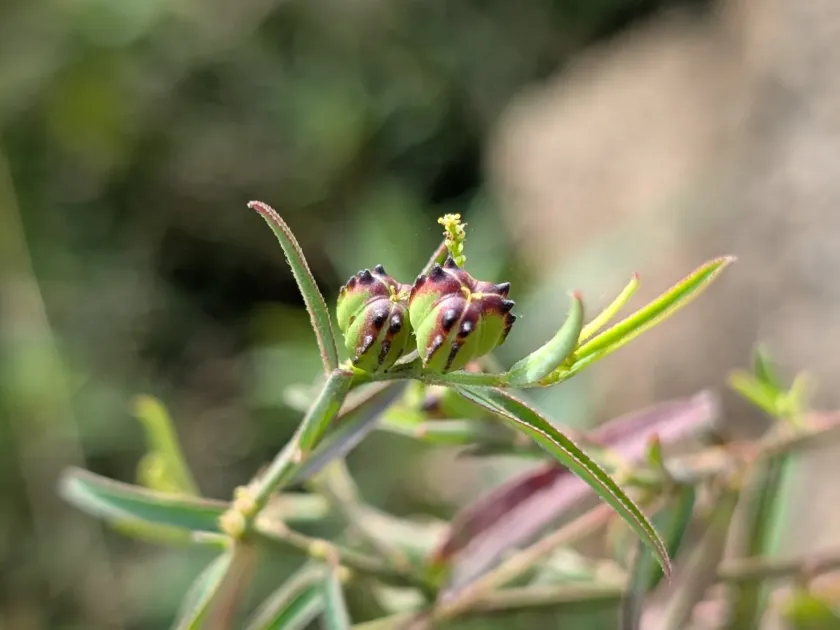
Description
Growing requirements
Microstachys chamaelea is a notable member of the Euphorbiaceae family, often studied for its resilience and distribution throughout tropical Asia and Australia.
This annual herb typically grows in varied environmental conditions, ranging from open grasslands to cultivated fields, often acting as an opportunistic colonizer of disturbed soils.
The morphology of the plant includes slender, sometimes prostrate or ascending stems, and alternate, simple leaves that allow it to maximize exposure to sunlight in competitive environments.
Climatically, it thrives in warm and humid conditions, requiring a consistent moisture supply to complete its life cycle from germination to seed production efficiently.
While often perceived as a weed in agricultural settings, its secondary metabolites have attracted research interest for potential antimicrobial properties in medical applications.
Main diseases and pests
The plant can be susceptible to defoliating insects and various coleopteran larvae that impact the vegetative biomass during the peak growing season.
In wet climates, pathogenic fungi can affect the root zone, particularly if the soil remains waterlogged for extended periods, leading to stunted growth.
Competition from more aggressive plant species in the same ecological niche often limits its dominance if the environment becomes highly shaded or crowded.
Viral pathogens transmitted by sap-sucking insects can cause mosaic symptoms on the leaves, negatively affecting the overall health of the plant.
Effective management in agricultural areas involves integrated pest control measures and timely soil cultivation to disrupt the growth of seedlings.