
Douglas silverpuffs
Microseris douglasii
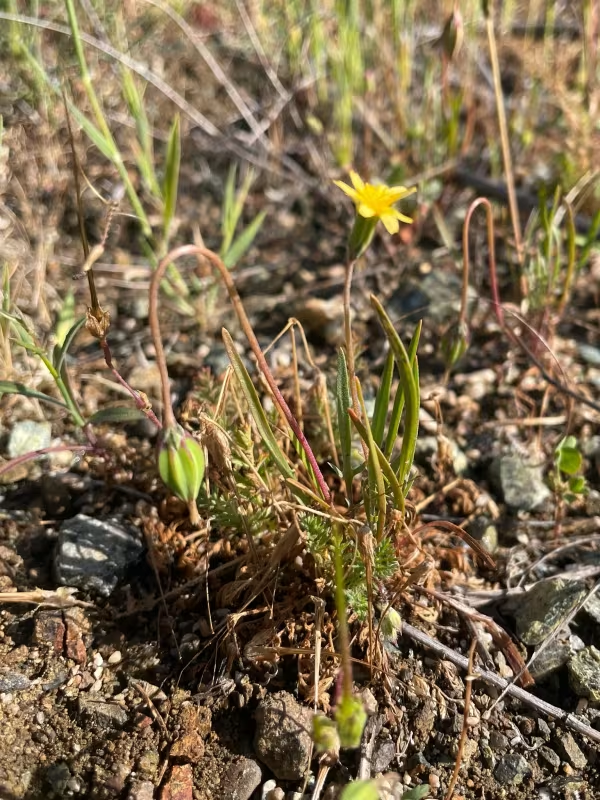
Description
Sowing dates
Sowing of Douglas silverpuffs is carried out directly in open ground or greenhouses in early spring, as soon as the soil warms up to 5–8 degrees Celsius.
The seeds of this crop have high germination rates but require surface distribution on the substrate, as they need light exposure for optimal development.
The optimal planting pattern involves row seeding with a distance of at least 20–25 centimeters between furrows to ensure proper ventilation of the plantings.
In regions with a mild Mediterranean climate, late-autumn sowing is possible, which allows for an extra-early greens harvest at the beginning of the next season.
To speed up the emergence of seedlings, it is recommended to pre-soak the seed material in growth stimulants for 6–8 hours before planting.
Growing requirements
Douglas silverpuffs are native to the western United States, thus preferring well-lit areas with direct sunlight throughout the day.
The crop has moderate soil requirements, showing the best results on light sandy or loamy substrates with a neutral or slightly acidic pH level.
The plant has relative drought resistance, but for succulent leaf mass production, it requires regular irrigation during the active vegetative growth phase.
An important development factor is the presence of high-quality drainage, as stagnant moisture in the root zone can lead to fungal infections.
During the flowering period, the crop demonstrates increased sensitivity to sharp fluctuations in night and day temperatures, which must be considered when selecting a site.
Yield
The yield of silverpuffs depends on the number of harvests: with careful trimming of outer leaves, the plant is capable of partial regeneration and new mass formation.
On average, 1.5 to 2.5 kilograms of fresh greens can be obtained from one square meter of planted area per production cycle.
The intensity of biomass accumulation directly correlates with the availability of nitrogen fertilizers during the early stages of vegetative development.
To increase the marketable yield, farmers often use multiple sowings, ensuring a continuous conveyor belt of fresh raw materials for the market.
Maximum productivity is observed in moderately cool spring conditions, when the plant maintains its vegetative phase longer before transitioning to flowering.
Main diseases and pests
The main threat to the plantings is slugs and snails, which actively graze on the tender succulent leaves of the crop during rainy periods of the season.
At early stages of development, seedlings can be damaged by cruciferous beetles, requiring preventive protection measures or the use of agricultural fleece.
Among fungal diseases, powdery mildew poses the greatest danger, appearing as a whitish coating on the leaf blades under excessive air humidity.
Root rot can occur with systematic violation of the irrigation regime and the use of heavy, poorly aerated soil mixtures in greenhouse production.
Aphids can also cause significant damage, sucking juices from young shoots and becoming vectors of viral infections that reduce crop quality.
Harvesting
Harvesting begins when the leaf rosette reaches a height of 10–15 centimeters, which usually occurs 45–60 days after seedling emergence.
Leaves are cut with a sharp tool 2–3 centimeters above the soil surface, being careful not to damage the central growing point to ensure subsequent harvests.
Harvesting is preferably done in the early morning hours when the plant tissues are maximally saturated with moisture and have the highest turgor stability.
After cutting, the harvested greens must be cooled quickly to slow down metabolic processes, which significantly extends the shelf life of the marketable product.
For long-term storage, the silverpuffs are placed in perforated polymer bags and kept at a temperature between 0 and +2 degrees Celsius in high-humidity conditions.