
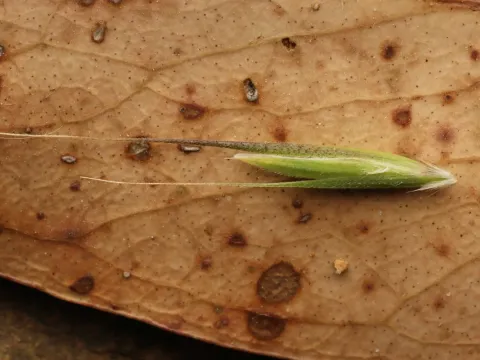
Microlaena
Microlaena
Microlaena stipoides, commonly known as Weeping Grass, is a perennial grass species belonging to the Poaceae family. It is highly regarded for its persistence and adaptability in various environmental conditions, particularly in its native Australian and New Zealand habitats.
What the section contains

Microlaena
This grass thrives in a wide range of soil types, ranging from sandy loams to heavy clays, provided there is adequate drainage. It is uniquely capable of maintaining growth under moderate shade, making it a versatile choice for agroforestry systems.
Microlaena requires moderate precipitation but is noted for its drought tolerance once established. Its deep root system allows the plant to access moisture during dry spells, which helps maintain green biomass even when other grasses go dormant.
In terms of agricultural management, Microlaena does not demand high nitrogen inputs, which reduces production costs. It is an ideal candidate for low-input sustainable farming practices, as it can sustain long-term grazing pressure without losing ground cover.
The main uses of this crop include livestock forage, soil stabilization, and site rehabilitation. Its ability to outcompete weeds through dense sward formation makes it an excellent choice for restoring damaged ecological sites.
Fungal diseases such as rust can become problematic under conditions of high humidity and poor air circulation. These pathogens primarily affect the foliage, reducing both the palatability and the nutrient density of the grass for livestock.
Insect pests, particularly scarab beetle larvae, pose a threat by feeding on the root system. This feeding can lead to uneven sward density and, in severe cases, the death of individual plants, necessitating targeted soil monitoring.
Weed management is mainly critical during the initial establishment phase. Once the plant has formed a thick turf, it becomes highly competitive and is generally successful in suppressing most invasive weed species within its habitat.
To prevent disease outbreaks, farmers should ensure that the grazing intensity is balanced. Overgrazing can weaken the plants and leave them more susceptible to pathogens and the invasion of opportunistic weeds during recovery periods.
Integrated pest management protocols, including regular field inspections and the use of resistant seed varieties, are recommended. Maintaining soil fertility through minimal amendments helps ensure the crop remains vigorous and resilient to potential infestations.