
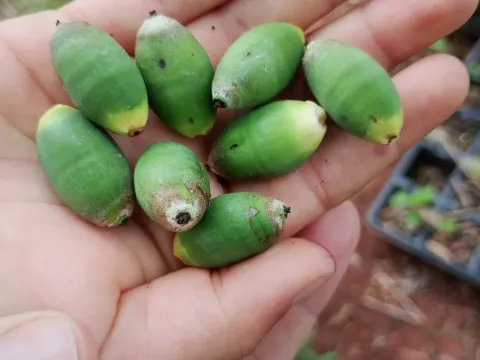
Microcoelum
Microcoelum
Sowing Microcoelum seeds requires a stable temperature range of 25–28°C to break dormancy and stimulate germination. The process is notably slow, often requiring several months of consistent care before the first shoots emerge from the soil.
What the section contains

Microcoelum
Pre-soaking seeds in warm water, potentially with natural root stimulants, can improve the germination rate. The growing medium must be highly porous and sterile to prevent fungal contamination during the long development period.
Containers must be kept in a high-humidity environment, typically using plastic covers to maintain a greenhouse effect. Regular ventilation is essential to avoid damping-off diseases caused by trapped moisture.
Once the first true leaf appears, seedlings should be carefully moved into individual pots. This stage requires extreme caution, as the roots are delicate and sensitive to even minor structural damage during transfer.
Professional nurseries typically maintain seedlings in partial shade, gradually introducing them to stronger light levels as the palms mature to build up their resilience.
Microcoelum belongs to the Arecaceae family, which consists of plants native to tropical and subtropical climates. They require a consistent environment, ideally between 20–30°C, to thrive and maintain active growth.
These palms prefer bright, indirect sunlight. Exposure to direct afternoon sun can cause significant leaf burn and physiological stress, especially in indoor settings or greenhouses where air circulation is limited.
The soil should be well-draining, slightly acidic, and rich in organic matter. A mixture of peat, perlite, and coarse sand provides the necessary aeration and moisture-retention balance for healthy root development.
Humidity is a critical factor for maintaining the aesthetic quality of the foliage. Low humidity levels often result in brown, crispy leaf tips, making misting or room humidifiers essential in dry climates.
Watering should be balanced: provide enough moisture to keep the soil slightly damp, but allow the surface to dry out before the next irrigation to prevent waterlogging, which the species dislikes intensely.
Spider mites and scale insects are the most frequent pests affecting Microcoelum. They thrive in dry indoor conditions and can quickly colonize the undersides of leaves, leading to yellowing and stunted growth.
Root rot is the primary physiological threat, usually occurring due to excessive watering or poor drainage. Once established, this condition is difficult to treat, often leading to the rapid decline of the plant.
Fungal leaf spot diseases may occur if the foliage remains wet for long periods in a stagnant environment. Ensuring good airflow and keeping the leaves dry helps prevent these common infections.
Mealybugs are another common nuisance, often found in the tight crevices where leaves attach to the stem. Systemic insecticides are recommended for effective control when physical removal is insufficient.
Maintaining a clean growing area and removing dead foliage promptly is the best strategy for disease prevention, ensuring the plant remains healthy and resistant to opportunistic infections.