
Microcachrys tetragona
Microcachrys tetragona
Description
Growing requirements
Microcachrys tetragona is a unique, prostrate coniferous shrub belonging to the Podocarpaceae family, native to the alpine regions of Tasmania. This slow-growing evergreen is renowned for its architectural, four-angled stems and its role as a botanical curiosity in specialised collections.
The plant requires cool, humid growing conditions with protection from extreme summer heat and direct intense sun. In a garden setting, it thrives in well-drained, acidic soil that mimics the rocky, moisture-retentive habitats of its native mountain slopes.
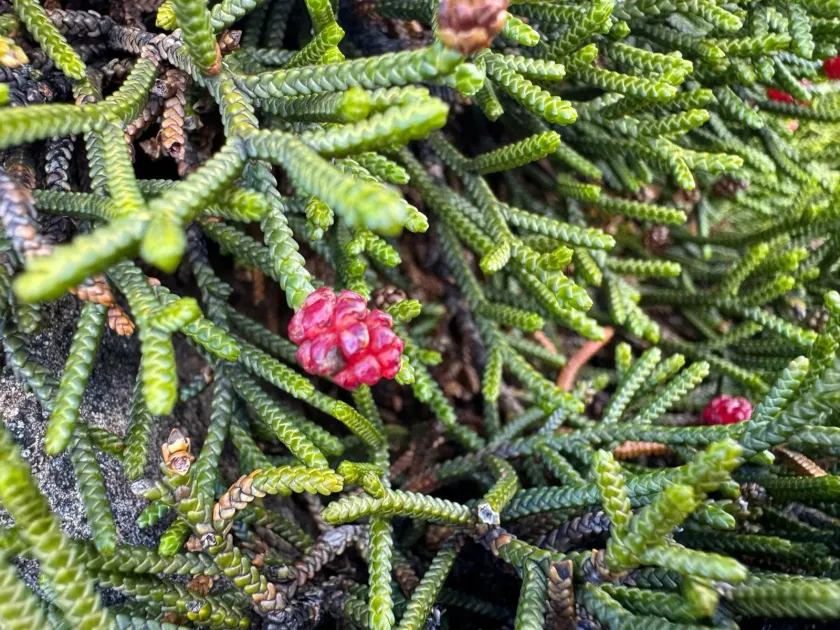
Botanically, it is distinct due to its scale-like leaves arranged in four rows, creating a square-shaped stem cross-section. Female plants are particularly prized for their fleshy, bright red, berry-like cones that mature in late summer, providing significant ornamental value to the plant.
Cultivation is best suited for rock gardens, trough gardens, or as a specimen in cool-climate alpine houses. It requires consistent moisture throughout the year and does not tolerate long periods of drought, which can lead to irreversible damage to the sensitive root system.
Propagating and establishing this species requires patience, as growth is very slow. It is important to maintain high air humidity and protect the foliage from strong, drying winds, which can lead to browning and thinning of the characteristic evergreen mat.
Main diseases and pests
Root rot caused by Phytophthora or other water-borne pathogens is the most significant threat to this species. Ensuring excellent drainage is paramount, and gardeners should avoid any heavy soil types that do not allow for rapid water movement through the root zone.
Spider mites are common pests that thrive in dry, stagnant air conditions, often attacking the inner foliage of the shrub. Regular misting and maintaining good airflow around the plant are essential cultural practices to prevent infestations and keep the foliage healthy.
During the winter months, frost heave can expose delicate surface roots to freezing temperatures. Applying a layer of organic mulch, such as pine needles or acidic peat, helps regulate soil temperature and protects the root system from rapid freeze-thaw cycles.
Nutrient deficiencies, particularly involving magnesium or iron, can cause chlorosis in the scale-like leaves. Using acidic-based fertilizers formulated specifically for conifers is recommended to maintain the deep green color and overall plant vigor throughout the growing season.
Overcrowding by more aggressive neighboring plants can limit airflow and light, creating a damp environment favorable for fungal leaf diseases. Regular maintenance and careful placement ensure the shrub has sufficient space to grow and remain free from pathogenic competition.