
Micrasterias fimbriata
Micrasterias fimbriata
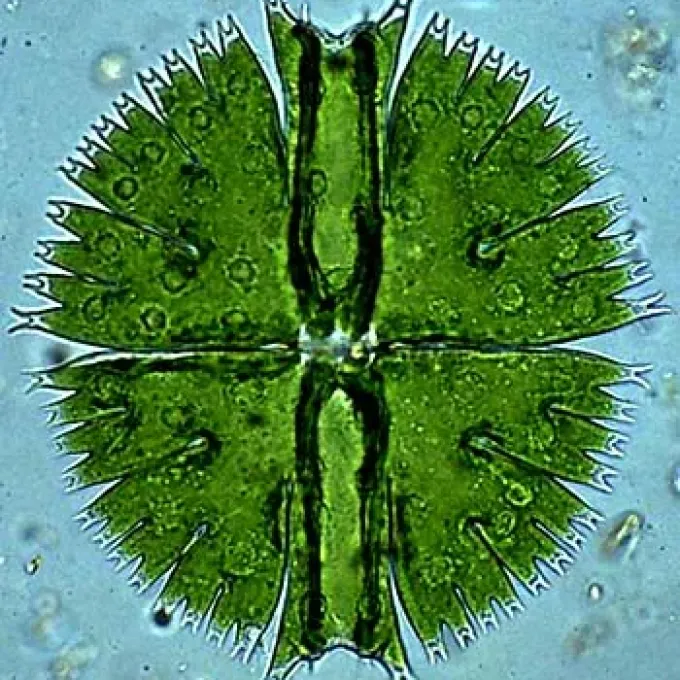
Description
Growing requirements
Micrasterias fimbriata is a species of freshwater green algae belonging to the Desmidiaceae family. It is characterized by its unicellular structure and intricate, bilaterally symmetrical cell shape, which is a hallmark of the desmid group.
These organisms are typically found in standing or slow-moving freshwater bodies such as bogs, fens, and small ponds. They exhibit a strong preference for oligotrophic, soft, and slightly acidic water environments, often associated with Sphagnum mosses.
Photosynthesis is the primary source of energy, requiring significant solar irradiation. Therefore, clear water conditions that allow light penetration are essential for the survival and optimal development of the algal colonies.
Environmental stability regarding nutrient content is crucial. While they require basic nutrients like nitrogen and phosphorus, excessive levels often associated with agricultural runoff can become detrimental to their metabolic health.
In terms of ecological utility, Micrasterias fimbriata serves as a high-quality bioindicator. Researchers monitor its presence and density to assess the health of aquatic ecosystems and the degree of environmental preservation in local watersheds.
Main diseases and pests
The primary threat to Micrasterias fimbriata populations is water eutrophication, which leads to excessive blooms of competitor algae. This reduces light availability and disrupts the delicate chemical balance of the habitat.
Agricultural pollutants, especially fertilizers and pesticides leaching into waterways, create toxic stress for these sensitive organisms. Chemical exposure often leads to inhibited cellular division and population collapse.
Habitat destruction, such as the drainage of wetlands and peatlands for agricultural or industrial use, remains a significant threat. Removing the natural substrate and water source directly terminates the organism's existence.
Sedimentation and siltation caused by soil erosion from nearby cultivated lands can smother the algae. Physical obstruction by silt prevents the organism from accessing necessary dissolved gases and nutrients.
The invasion of dominant macrophytes and filamentous algae creates a shading effect that is difficult for Micrasterias to overcome. This competition for space and light pressure significantly restricts the distribution of the species.