
Metalasia muricata
Metalasia muricata
Description
Sowing dates
The seeds of Metalasia muricata are typically sown during the spring season when soil temperatures remain consistently mild. March to April is considered the ideal window, allowing young seedlings to establish strong roots before the peak of the summer heat.
For germination, use a light, well-draining substrate enriched with sand. Seeds should be buried at a minimal depth, barely covered with soil, to ensure they receive sufficient light, which is crucial for successful development.
Maintain temperatures between 18 and 22 degrees Celsius throughout the germination period. Since the process can be slow, consistent and moderate moisture is essential; however, the soil must never become waterlogged, as this is detrimental to seed health.
In commercial nurseries, propagation via semi-hardwood cuttings at the end of summer is a common practice. Treating these cuttings with rooting hormones significantly increases the success rate and ensures more uniform development of the new shrubs.
Transplanting seedlings to their final location requires care to avoid damaging the root system. As the plant is sensitive to root disturbance, moving it directly from containers via the transfer method is strongly recommended to preserve the soil ball.
Growing requirements
Metalasia muricata belongs to the Asteraceae family and is native to the coastal regions of South Africa. As a perennial shrub, it requires full sun exposure to thrive and maintain its unique foliage structure, which is a hallmark of this species.
The plant performs best in nutrient-poor, sandy, or rocky soils with a neutral or slightly acidic pH. It cannot tolerate heavy, clay-based soils or waterlogged conditions, which invariably lead to root rot and eventual plant failure.
Climatically, it is well-suited to Mediterranean-style regions with mild winters. While it demonstrates decent drought tolerance once established, it requires supplemental irrigation during its active growth phase, particularly if cultivated in containers.
To ensure aesthetic appeal and plant health, regular pruning is necessary. Removing spent flower heads and trimming back long, leggy branches encourages the plant to maintain a dense, bushy form, which is highly desirable for landscaping.
In colder climates, Metalasia muricata must be treated as a container plant. During autumn, it should be moved to a cool, well-lit indoor environment with temperatures around 5 to 10 degrees Celsius to survive the winter dormancy period safely.
Main diseases and pests
The most significant threat to Metalasia muricata is improper watering, especially over-irrigation. Excessive moisture leads to root rot, which is difficult to reverse, so careful monitoring of soil moisture levels is the best form of prevention.
Pests such as scale insects and mealybugs can occasionally infest the shrub. These insects feed on plant sap, causing stunted growth and leaf deformation. Regular inspection of stems and leaves is vital to detect infestations at an early stage.
In confined or poorly ventilated growing conditions, powdery mildew may develop. Preventive measures include ensuring adequate spacing between plants and providing good airflow to keep the foliage dry and healthy throughout the growing season.
Systemic insecticides are effective for controlling stubborn pest populations. For localized infestations, mechanical removal using alcohol-soaked swabs or gentle washing with mild soapy water is often sufficient and avoids chemical use.
Routine phytosanitary checks are essential for long-term health. Regularly removing dead or diseased branches improves light penetration and airflow through the center of the plant, significantly reducing the likelihood of disease outbreaks.
Harvesting
The practical use of Metalasia muricata centers on its value in ornamental gardening and the floral industry. For dried flower arrangements, the flower heads should be harvested when they are fully open to capture the most vibrant colors.
Stems should be cut during dry weather to prevent moisture buildup on the harvested material. Tie the branches into small bundles and hang them upside down in a shaded, well-ventilated location to ensure proper drying while preserving the structure.
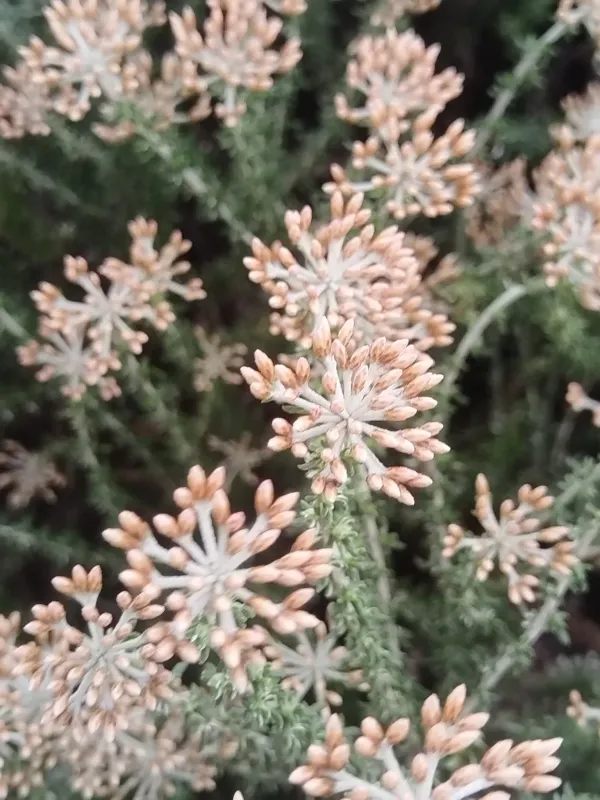
The plant is highly prized for its silvery foliage and dense, button-like flower clusters, which remain attractive for a long time. It is a popular choice for rustic or Provence-style dried bouquets due to its durability and distinct appearance.
In landscape architecture, Metalasia muricata serves as an excellent accent plant for xeriscaping or Mediterranean-themed gardens. It pairs beautifully with other sun-loving grasses and drought-resistant perennials in mixed borders.
Seed collection should take place as soon as the flower heads begin to turn brown. Prompt harvesting is necessary because the seeds possess fluffy appendages that catch the wind, allowing them to disperse naturally if left on the plant too long.