
Mercurialis tomentosa
Mercurialis tomentosa
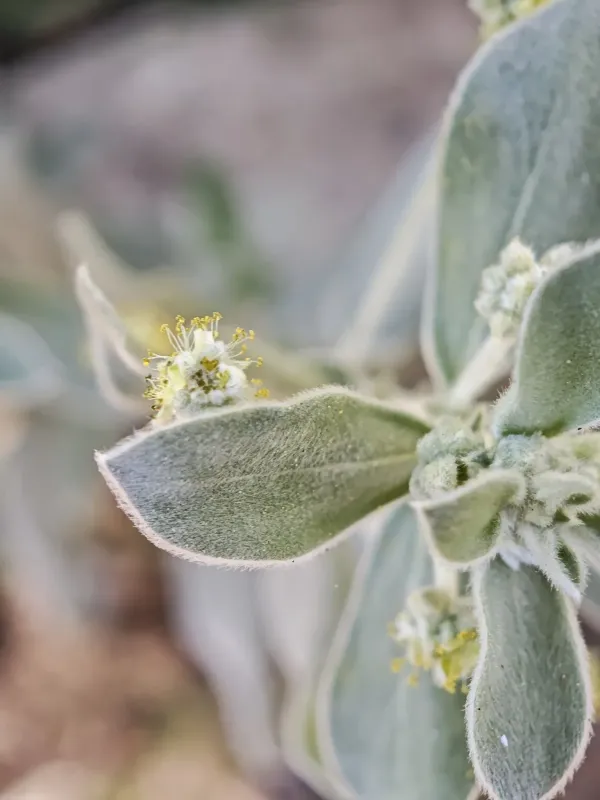
Description
Growing requirements
Mercurialis tomentosa, commonly known as woolly mercury, is a member of the Euphorbiaceae family. This perennial plant is indigenous to the Mediterranean region, where it thrives in arid and rocky environments characterized by intense solar radiation.
The plant is anatomically adapted to xeric conditions. Its dense, woolly indumentum (pubescence) on the leaves and stems acts as a thermal barrier, reflecting sunlight and significantly reducing moisture loss through transpiration.
Regarding soil requirements, the species performs best in well-draining, slightly alkaline soils. It is highly intolerant of waterlogged conditions, which can quickly cause root rot and systemic physiological stress.
Climate adaptation focuses on warm, dry summers and mild winters. While the plant exhibits significant drought tolerance, consistent moisture during the early establishment phase is essential for developing a deep and robust root structure.
Economically, Mercurialis tomentosa is utilized in specialized xeriscaping projects and experimental botanical trials. It is appreciated for its low-maintenance profile in gardens designed to withstand minimal human intervention.
Main diseases and pests
The primary threats to Mercurialis tomentosa cultivation are fungal pathogens caused by improper water management. High humidity combined with poor airflow is a catalyst for various types of leaf spot and stem blight.
Pest pressure is generally low, but aphids and spider mites can colonize the foliage during hot, dry spells. These pests damage the plant by sucking nutrients, which leads to stunted growth and yellowing of the leaves.
To prevent disease outbreaks, growers should implement a strict irrigation schedule that allows the soil surface to dry out completely between waterings. Air circulation within the planting site must be prioritized.
Integrated pest management (IPM) practices should be adopted to monitor for initial signs of infestation. Early intervention using soaps or horticultural oils is usually effective without damaging the plant's delicate hairs.
Avoiding the use of high-nitrogen fertilizers is recommended, as overly rapid growth makes the plant tissue more susceptible to physical damage and pest attacks. Sustainable cultivation relies on stable soil structure and balanced nutrition.