
Natal grass
Melinis repens (Willd.) Zizka
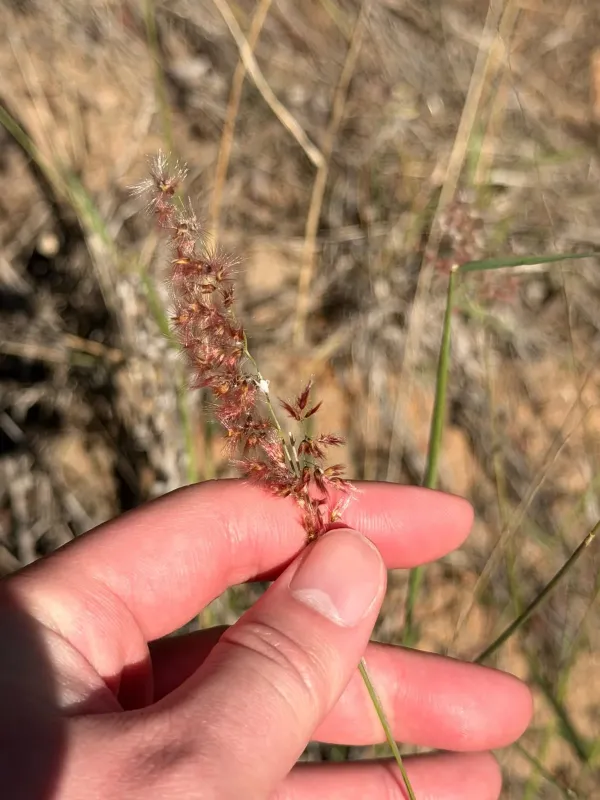
Description
Sowing dates
Natal grass is a warm-season species that requires high temperatures for optimal germination. Sowing should only occur once the soil has warmed up significantly and the risk of frost has passed, ideally when temperatures consistently reach above 20 degrees Celsius.
The seeds are tiny and require shallow planting, ideally no deeper than 1 cm. Broadcasting or light drilling followed by rolling ensures the seeds make sufficient contact with the soil to initiate the germination process efficiently.
Establishing a uniform stand is crucial for productivity. Using a seed drill with row spacings of 25–30 cm helps manage competition and allows for easier weed control during the critical first month of plant establishment.
Early season weed management is highly recommended as the seedlings exhibit slow initial growth. Once the grass reaches the tillering stage, it generally outcompetes most weeds, creating a dense and healthy sward.
In regions with shorter growing seasons, starting the plants in containers or greenhouse trays and transplanting seedlings can significantly increase the final yield of forage mass by extending the growing duration.
Growing requirements
Melinis repens is a member of the Poaceae family that thrives in full sunlight. It is highly intolerant of shade, which can lead to elongated, weak stems and significantly reduced biomass production.
One of the primary benefits of this crop is its extreme resilience on low-fertility soils. It performs well in sandy, rocky, or acidic environments where more demanding forage crops would fail to establish.
This grass is widely recognized for its superior drought tolerance. Once established, the root system is capable of extracting water from deep soil profiles, maintaining growth even during prolonged dry spells that affect other grasses.
Proper soil drainage is essential for the health of Natal grass. While it loves moisture, it cannot tolerate waterlogged conditions or heavy clay soils that compact easily, as these environments trigger root rot.
Although it is a hardy plant, moderate applications of nitrogen-based fertilizers can significantly boost yield in intensive grazing systems. It is important not to over-fertilize, as this may compromise its inherent drought resistance.
Yield
The biomass yield of Natal grass is contingent upon soil quality and water availability. Under favorable conditions, it is a highly productive plant that can sustain multiple harvests during a single growing season.
Regular harvesting or rotational grazing encourages secondary growth and helps maintain the forage at its peak nutritional quality. The plant recovers quickly, provided the harvest is timed correctly to allow for plant regeneration.
Nutritionally, the grass is most valuable during the pre-flowering stage. At this phase, it contains high levels of protein and soluble carbohydrates, making it an excellent fodder option for cattle and other ruminants.
In addition to its agricultural value, the plant is highly valued for its aesthetic appeal. The silver-pink inflorescences make it a popular choice for landscape restoration and decorative garden use where hardy perennials are needed.
When grown for seed production, harvest timing is critical. Since the seeds are equipped with awns and hair that catch the wind, they disperse easily upon maturity; harvesting should begin just before peak shattering.
Main diseases and pests
Natal grass is generally resistant to many common diseases, making it a low-input crop. Its hardiness is a major advantage for producers seeking to reduce chemical usage and operational costs.
Fungal issues, such as leaf spot, may appear in environments with consistently high humidity. Maintaining good air circulation within the stand is the best preventative strategy against these types of infections.
Insect pests typically cause minimal damage. While grass aphids or caterpillars may be present, their populations rarely reach the economic threshold required for intervention, as the plant's rapid growth often compensates for light damage.
The most significant concern for land managers is the plant's potential for aggressive spread. It can quickly colonize disturbed areas, so it is important to monitor field boundaries and prevent seed drift into unwanted zones.
Integrated management focusing on mechanical maintenance and appropriate stocking rates is sufficient to keep the crop healthy. Avoiding overgrazing is vital to prevent the invasion of less desirable secondary weeds.
Harvesting
For high-quality hay production, harvesting should be performed before the plant reaches full maturity. Cutting at the boot stage ensures the best balance between biomass quantity and palatability for livestock.
Using a standard rotary mower at a cutting height of 5–7 cm is recommended. This height protects the base of the plant, allowing it to regrow vigorously for a subsequent cut later in the season.
The hay dries relatively quickly in the field due to the plant's fine stems. Frequent turning of the windrows is advised to ensure consistent drying and to prevent the development of mold, especially in humid climates.
Storage in a dry, ventilated shed is necessary to maintain the nutritional value of the hay. Proper coverage is essential to protect the bales from rain, which can rapidly deteriorate the quality of the harvested fodder.
When harvesting for seeds, mechanical combines can be adjusted to handle the light weight of the seed heads. Post-harvest, the seeds should be cleaned and stored in cool, dry conditions to ensure high germination rates for future planting.