
Melic grass
Melica picta
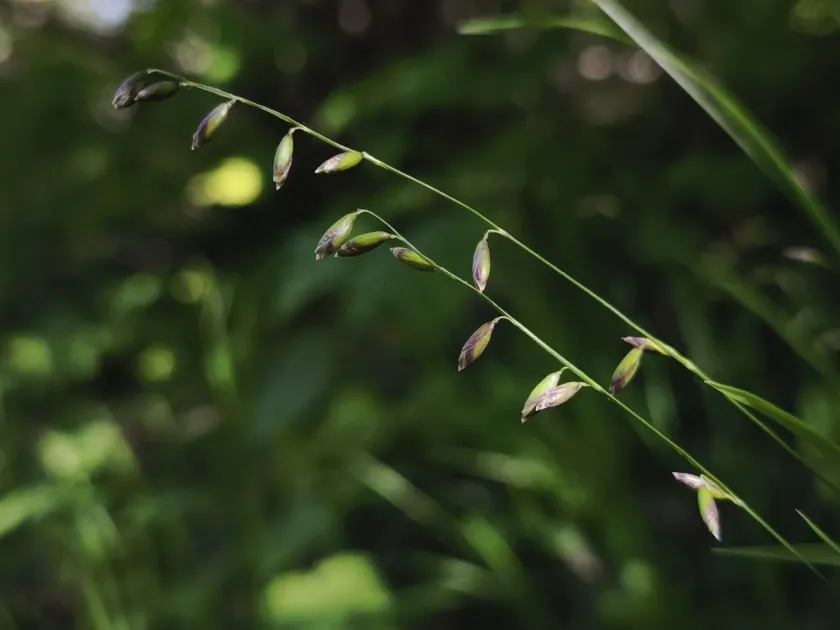
Description
Growing requirements
Melica picta, commonly known as Melic grass, is a perennial herbaceous plant belonging to the Poaceae family. Native to various regions across Europe and Asia, it typically inhabits forest edges, moist meadows, and thickets.
The plant exhibits a loosely tufted growth habit, reaching heights between 40 and 100 centimeters. It features slender, upright stems and narrow, grayish-green leaves that contribute to its distinctive visual profile in natural grasslands.
Regarding environmental preferences, the species thrives in moderately moist and nutrient-rich soils. It shows a preference for neutral to slightly acidic soil conditions and requires consistent moisture during the early growing season to establish a robust root system.
While it is relatively shade-tolerant compared to other meadow grasses, Melica picta performs best in open or semi-shaded areas where it can access sufficient light for biomass production. It is generally hardy, adapted to the temperate climate of its native range.
Agronomic management for this species focuses on maintaining balanced soil fertility and ensuring the plant is not subjected to intensive grazing pressure, which could hinder its ability to persist as a perennial component of the meadow.
Main diseases and pests
Melica picta can be susceptible to common fungal pathogens affecting the Poaceae family, particularly rust diseases which appear as powdery or pustular spots on leaves during humid and warm weather conditions.
Insect pests, including cereal flies and aphids, often target the young shoots and stems of the plant. These pests can significantly reduce the nutritional quality and overall biomass yield if infestations are left unmanaged.
Powdery mildew is another potential threat, often arising in densely populated stands where air circulation is restricted. Managing plant density and ensuring proper field sanitation helps in mitigating these risks.
Biological control strategies, such as promoting the presence of natural predators, are encouraged to keep aphid populations below the economic injury level without relying on heavy chemical interventions.
Proactive monitoring of the crop, especially during the peak of the growing season, allows farmers to identify early signs of stress or disease and apply necessary management practices to ensure crop health.
Harvesting
The harvest of Melica picta for forage purposes should ideally occur at the beginning of the heading phase. Harvesting at this stage ensures the highest concentration of proteins and digestible nutrients for livestock.
If utilizing the crop for hay, rapid drying in the field is essential to preserve nutritional quality. The cut material should be turned regularly to ensure uniform moisture loss and prevent mold development.
For pasture management, rotational grazing is recommended to ensure the plant has sufficient recovery time after defoliation, which supports the longevity and productivity of the perennial stand.
Seed harvesting requires careful timing, as the seeds have a tendency to shed easily once fully ripe. Mechanical harvesting should be adjusted for the specific size and weight of the seeds to minimize loss.
Post-harvest storage should be done in cool, dry conditions to maintain seed viability or forage quality, ensuring the material remains free from dampness that could lead to spoilage.