
Melaleuca coccinea
Melaleuca coccinea
Description
Growing requirements
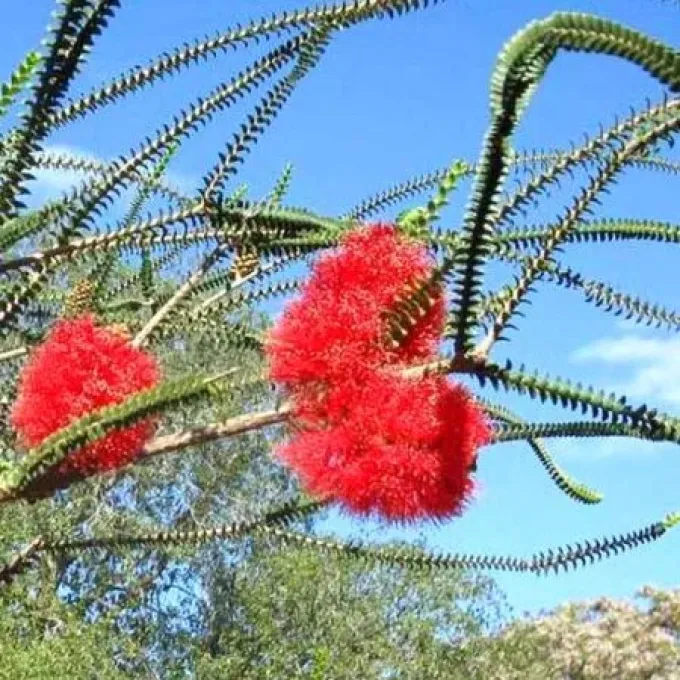
Melaleuca coccinea, commonly known as the Scarlet Honey Myrtle, is an evergreen shrub belonging to the Myrtaceae family. It is native to the south-western regions of Western Australia, thriving in semi-arid environments.
The crop demands well-draining soils, preferably sandy or gravelly in texture. It is highly intolerant of waterlogged conditions, making proper drainage the primary prerequisite for its successful establishment and longevity.
Full sun exposure is essential for the plant to achieve its potential bloom and maintain a dense, healthy structure. In climates with seasonal frosts, the shrub must be provided with protection or cultivated in containers to avoid damage from sub-zero temperatures.
Agricultural practices for this species focus on low-intensity maintenance. Once established, the shrub exhibits excellent drought tolerance, requiring minimal supplemental irrigation unless grown in extreme arid conditions.
The main commercial application of Melaleuca coccinea is within the ornamental sector. Its striking flowers make it a preferred choice for dry-climate landscaping and xeriscaping projects, providing both aesthetic value and support for local pollinators.
Main diseases and pests
Root rot caused by Phytophthora species is the most significant threat to the health of the plant. This condition is primarily induced by poor soil aeration and excessive humidity, emphasizing the need for porous substrate.
Insect pests, including mealybugs and spider mites, are common challenges, especially when the plant is grown under glass or in environments with poor air circulation. These pests can cause significant damage to foliage and flower buds.
Regular inspections of the foliage and stems are crucial for early pest detection. Integrated pest management strategies should be employed to control infestations while maintaining the delicate balance of the plant's health.
Fungal leaf spot diseases can emerge if the canopy remains wet for extended periods. Pruning to ensure adequate airflow within the branches is a recommended cultural practice to mitigate these risks effectively.
Maintaining proper nutrient balance is vital, as excessive fertilization can promote soft, succulent growth that is more susceptible to pest attacks. Balanced, slow-release fertilizers are preferred to promote natural, sturdy development.