
Silver-leaved paperbark
Melaleuca argentea
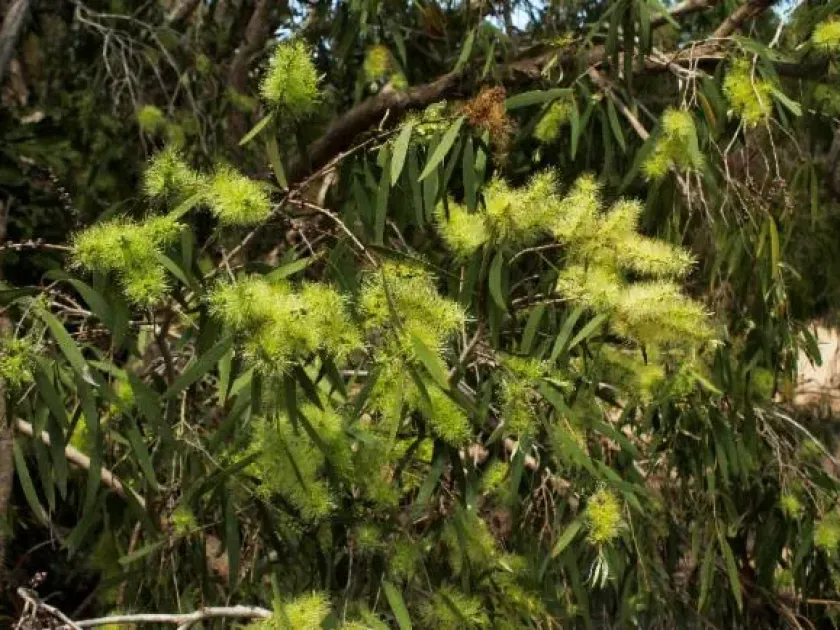
Description
Growing requirements
The Silver-leaved paperbark (Melaleuca argentea) is a member of the Myrtaceae family, native to the northern regions of Australia. This tree is naturally adapted to moist environments, frequently occurring along riverbanks and in swampy areas.
For successful cultivation, this crop requires a warm tropical or subtropical climate. It does not tolerate frost, and sustained temperatures above +20°C are essential for the rapid growth and development of the canopy.
Regarding soil requirements, it prefers moist, fertile substrates, though it is remarkably adaptable to various textures, including sandy and loamy soils. Its ability to tolerate temporary waterlogging makes it ideal for marshy lands.
The species is highly light-demanding. Full exposure to sunlight is crucial for maintaining the plant's distinctive silver foliage color, which is a key aesthetic and physiological feature of this species.
Standard agricultural practices involve consistent moisture management, although the plant shows high salt tolerance. Careful selection of site drainage is recommended, despite the species' fondness for water.
Yield
The primary economic focus of Melaleuca argentea is the extraction of essential oils from its leaves. These oils contain specific terpenes valued in the pharmaceutical and fragrance industries for their antimicrobial properties.
The timber of the silver-leaved paperbark is valued for its durability and resistance to rot, especially in wet conditions. It is used in local carpentry and for manufacturing aesthetic wood products due to its unique texture.
Productivity in agricultural settings is managed through systematic pruning, which promotes the growth of new foliage. This technique ensures a continuous supply of biomass for oil distillation and prevents the tree from becoming unwieldy.
Beyond traditional production, the species is utilized in land reclamation and phytoremediation projects. Its ability to thrive in saline and waterlogged soils makes it a powerful tool for environmental restoration.
In the landscape industry, it is widely utilized for its unique paper-like bark and silver canopy, serving as an effective windbreak or decorative tree in tropical climate zones.
Main diseases and pests
Fungal diseases related to high humidity and poor airflow are the most significant threats to Melaleuca argentea. Proper spacing between trees is essential to ensure adequate ventilation and prevent the spread of infections.
Common pests include foliage-feeding insects, such as beetles and caterpillars, which can impact the quality of the harvested biomass. Integrated pest management should be implemented to minimize chemical intervention.
Young plants are susceptible to rodent damage near the base, which can girdle the stems. Protective barriers or regular weeding around the base of the saplings are necessary to ensure survival in the early stages.
Root rot can occur if soil conditions become stagnant for too long, despite the species' preference for moisture. Maintaining soil structure through periodic aeration is a recommended preventative measure.
Routine monitoring of the plantation is vital for identifying early signs of infestation or nutrient deficiency. Early intervention keeps the trees healthy and maintains consistent yields for essential oil production.