
Martynia annua
Martynia annua L.
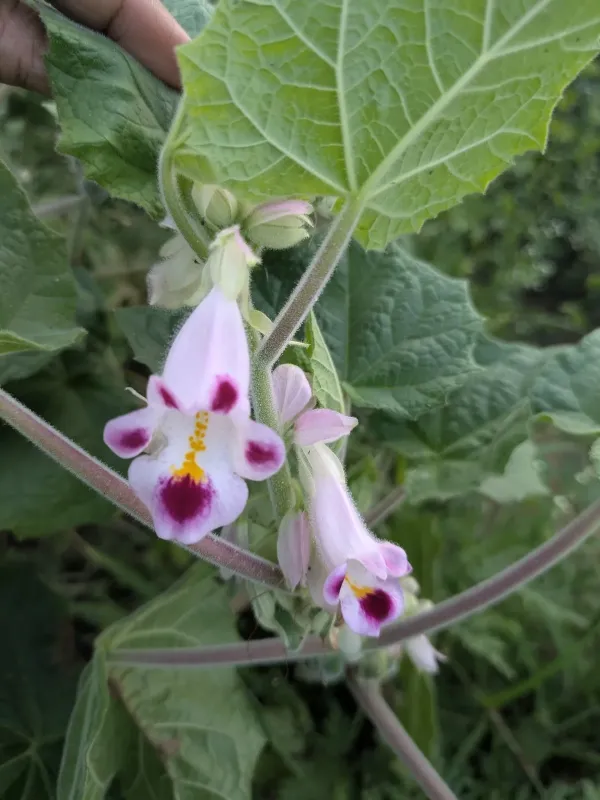
Description
Sowing dates
Martynia annua is a warm-season annual that thrives in full sun and requires well-warmed soil to initiate germination successfully.
Seeds should be sown directly into the ground after the risk of frost has completely passed, typically when soil temperatures reach at least 15°C to 20°C.
Pre-soaking the seeds in lukewarm water for approximately 24 hours is highly recommended to soften the hard endocarp, which significantly improves the germination rate.
The seeds should be planted at a depth of 2–3 cm, with a spacing of about 60–75 cm between rows, allowing the plant enough space for its vigorous growth.
In regions with shorter growing seasons, starting the plants in containers indoors 4–6 weeks before the final frost date is a prudent strategy to ensure mature seed production.
Growing requirements
As a member of the Martyniaceae family, this plant prefers fertile, well-draining soils with a neutral pH to sustain its rapid vegetative growth.
The plant requires significant sunlight throughout the day; areas with partial shade will result in elongated stems and reduced flower and fruit production.
While relatively drought-tolerant once established, consistent moisture is vital during the flowering and fruit-setting stages to ensure high-quality yields.
High temperatures are essential for the healthy development of Martynia annua, as the plant exhibits its best performance in climates with temperatures between 22°C and 30°C.
Proper airflow is critical, so avoid overcrowding the plants, which helps prevent excessive humidity build-up around the foliage and stems.
Main diseases and pests
Martynia annua is generally resilient against many pests due to the sticky, glandular hairs on its leaves and stems, which act as a physical and chemical deterrent.
Root rot and stem blight are the primary threats, particularly in poorly drained soils or during prolonged periods of high humidity and rainfall.
Powdery mildew can occur in dense plantings where air circulation is restricted, appearing as white patches on the leaf surfaces.
If fungal issues arise, it is imperative to improve drainage immediately and remove affected plant tissue to prevent the spread of the infection to healthy specimens.
Consistent monitoring and ensuring the garden beds are free from standing water after irrigation are the best methods to manage potential plant health risks.
Harvesting
Harvesting timing depends on the intended end-use of the product, with two distinct stages identified for professional agricultural practices.
If harvested for culinary purposes, the pods should be picked when they are young, tender, and green, long before they develop the woody, claw-like hooks.
For seed harvesting, the pods must remain on the plant until they turn dark brown and dry out, which indicates full physiological maturity of the seeds inside.
Care must be taken during harvest, as the mature pods develop extremely sharp, hooked appendages that can easily penetrate the skin or cause damage to clothing.
Collected pods should be dried in a ventilated area, and once the dry pods split, the oil-rich seeds can be extracted, cleaned, and stored in a cool, dry environment.