
Marsh fleawort
Tephroseris palustris (L.) Rchb.
Description
Growing requirements
Marsh fleawort, scientifically known as Tephroseris palustris, belongs to the diverse Asteraceae family. This species is a specialized wetland plant that thrives in environments characterized by high water saturation and cool temperate climates.
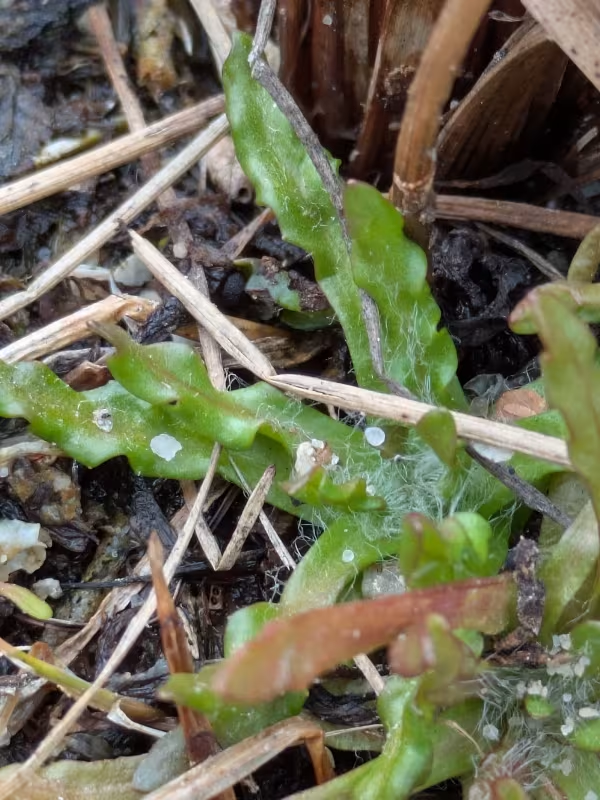
The plant is anatomically distinguished by a dense, cobweb-like pubescence that covers its stems and foliage. This morphological feature provides a vital adaptation for thermal regulation and moisture retention in the challenging climates of the Northern Hemisphere.
Its native range spans across northern Europe, Siberia, the Russian Far East, and North America. The species is typically found in marshy meadows, riverbanks, and pond fringes, playing a significant role in the local wetland biodiversity.
Regarding cultivation requirements, the plant demands consistently waterlogged soil conditions. It possesses an extremely low tolerance for dry spells, making it unsuitable for standard agricultural fields without specialized irrigation systems or natural water tables.
The agrotechnical management of marsh fleawort involves protecting the root zone from mechanical damage and maintaining specific water levels. Given its lifecycle, it grows rapidly during the brief summer window typical of boreal regions.
Main diseases and pests
The primary threats to marsh fleawort in cultivation are fungal diseases, particularly mildew and rusts that proliferate in humid, stagnant air. Proper spacing and airflow are critical to preventing widespread infection within a plantation.
Insect pests, such as aphids and specific leaf beetles, can pose a risk to the vegetative growth of the plant. These organisms can weaken the plant's structure, making it more susceptible to secondary pathogenic infections.
Root rot is a common physiological challenge, often triggered by a lack of oxygen in the substrate if the water becomes completely stagnant. Maintaining a balanced water flow is essential for healthy plant development.
Control strategies should focus on integrated pest management, emphasizing cultural practices such as sanitation and maintaining optimal environmental conditions. Chemical intervention is rarely required if the ecosystem is well-managed.
Understanding the sensitivity of the plant to its environment is key to managing populations, as any drastic change in local hydrological conditions can lead to the rapid decline of the affected plants.