
Mappia nimmoniana
Mappia nimmoniana
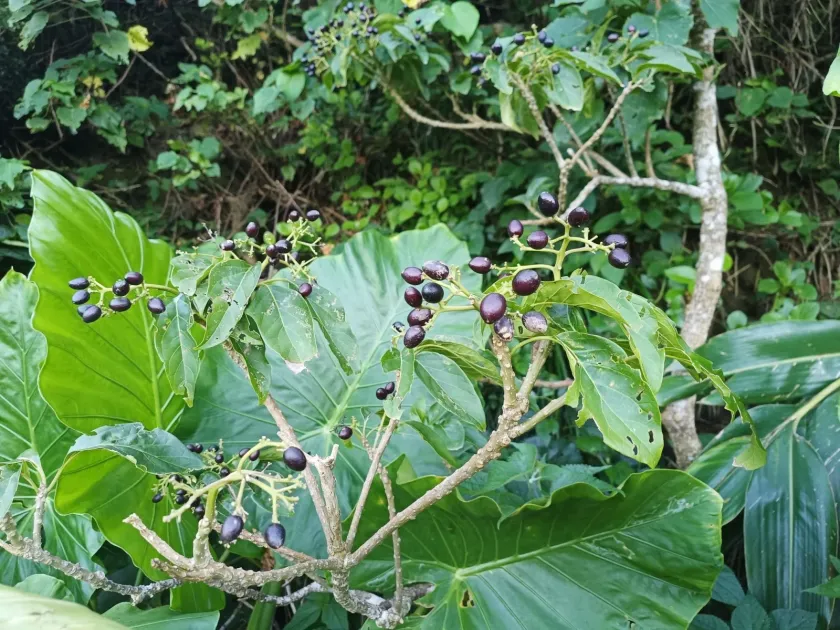
Description
Sowing dates
Mappia nimmoniana is a woody perennial that propagates primarily through seeds. Due to their hard seed coats, seeds require scarification and stratification treatments to break dormancy and ensure high germination rates before sowing.
The ideal sowing window is just before the onset of the monsoon season. This timing provides the natural moisture required for seedlings to establish themselves while minimizing the stress of rapid drying during the early development phase.
Seedlings grow slowly and demand careful nursery management. Providing shade is crucial in the initial months to protect young plants from intense solar radiation and high temperatures that could lead to desiccation.
Transplanting into the main field should be carried out after 6 to 12 months of nursery care, once the plant has developed a robust root system capable of navigating the soil to find nutrients.
While vegetative propagation through cuttings is technically feasible, it requires specialized greenhouse conditions with precise misting and the application of rooting hormones to achieve successful commercial production.
Growing requirements
Belonging to the Icacinaceae family, this species thrives in tropical climates. It requires consistent humidity and temperatures ranging from 18 to 28 degrees Celsius to maintain healthy metabolic functions.
Well-drained, porous soils rich in organic matter are essential for optimal growth. Waterlogging must be strictly avoided, as the roots are highly susceptible to hypoxic conditions, which lead to rapid decay.
Mappia nimmoniana prefers high-altitude tropical environments where moderate atmospheric moisture supports its growth. Soil pH should ideally be slightly acidic, reflecting the natural forest habitat where it evolved.
Light exposure plays a major role in the biosynthesis of secondary metabolites, particularly camptothecin. While young plants need partial shade, mature trees require significant access to filtered sunlight to maximize productivity.
In regions with distinct dry seasons, supplemental irrigation systems are mandatory. Consistent water availability is linked to the plant's ability to synthesize high levels of medicinal alkaloids effectively.
Yield
The economic value of this crop is entirely dependent on its content of camptothecin, a high-value anti-cancer alkaloid. Producers focus on maximizing the concentration of this compound across the stem and root bark.
Commercial harvesting is only viable once the tree reaches maturity, typically between 10 and 15 years of age. Premature harvesting results in low yields and is counterproductive to sustainable farm management.
Yield quality is highly dependent on agricultural inputs and soil fertility management. Proper spacing between trees is vital to ensure adequate air circulation and nutrient availability, which influence the development of the wood.
Regular thinning of plantations helps remove stagnant trees, allowing the remaining healthy ones to grow larger and accumulate more biomass. This practice optimizes the overall return per hectare of land.
Yield predictions for this crop are inherently complex due to the long biological cycle, necessitating strategic long-term planning for landowners looking to enter this pharmaceutical-grade market.
Main diseases and pests
Fungal pathogens represent the most significant threat to Mappia nimmoniana plantations, especially in high-humidity zones. Root rot is particularly dangerous because it often progresses unnoticed until the plant shows visible symptoms.
Pests such as termites and wood-boring beetles can significantly damage the stem, affecting both the health of the tree and the quality of the harvested medicinal bark and wood.
Defoliating insects can retard the growth of saplings significantly. Integrated Pest Management (IPM) strategies, including the use of biological controls, are highly recommended to avoid chemical residues in the final product.
Poor drainage is the primary agrotechnical risk. When soil becomes waterlogged, the tree’s immune system is weakened, making it highly susceptible to secondary infections and opportunistic pathogens.
Routine monitoring and the removal of diseased individuals are critical hygiene practices that prevent the spread of infections throughout the dense plantation environment.
Harvesting
Harvesting is a critical phase that involves harvesting the stem and roots. Extreme care must be taken to minimize loss during the cutting process, as the medicinal alkaloids are sensitive to physical degradation.
Immediate post-harvest processing is essential. Once the bark and wood are collected, they must be cleaned and prepared for drying to stabilize the chemical composition and prevent rapid oxidation.
Drying should take place in a shaded, well-ventilated area. High temperatures should be strictly avoided to prevent the denaturation of heat-sensitive compounds, ensuring the pharmaceutical quality remains intact.
After the material is thoroughly dried to a crisp consistency, it is milled into the specific particle size required by pharmaceutical extractors. Proper milling ensures efficient alkaloid recovery.
Storage must be in moisture-proof containers away from direct sunlight. Protecting the material from environmental factors is vital to maintain the stability of camptothecin for an extended shelf life.