
Mansonia
Mansonia altissima (A. Chev.) A. Chev.
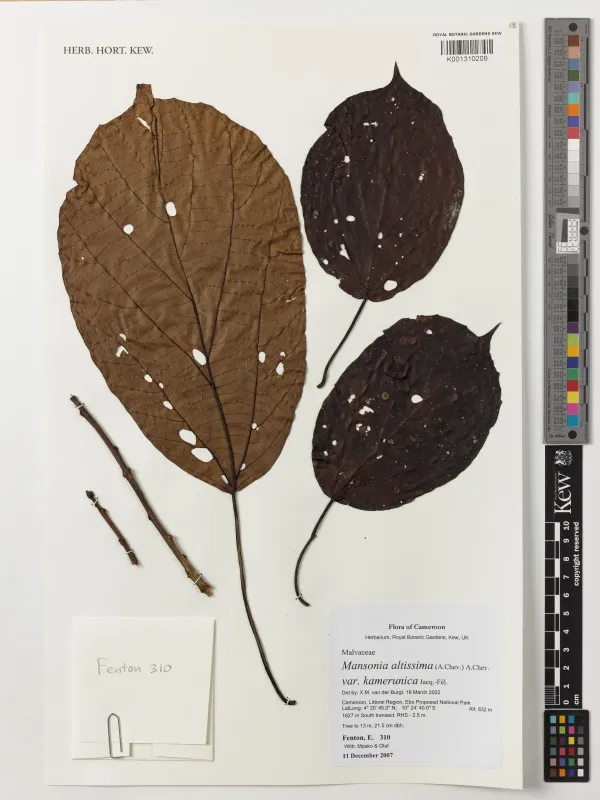
Description
Growing requirements
Mansonia (Mansonia altissima) is a significant tropical tree species belonging to the Malvaceae family. It typically reaches heights of 30 meters or more, characterized by a straight, cylindrical trunk and smooth, greyish-brown bark that provides a distinctive appearance in its native habitat.
The tree is native to the moist, semi-deciduous forests of West and Central Africa. Countries such as Nigeria, Ghana, Cameroon, and Ivory Coast host the main populations, where the climate provides the necessary conditions for its development in lowland tropical environments.
Optimal growth requires high temperatures year-round and substantial annual rainfall. The tree prefers fertile, well-drained soils and is generally not suited for waterlogged areas, although it can tolerate brief periods of heavy humidity common in its natural range.
In terms of light, juvenile specimens thrive in areas with sufficient canopy gaps, while mature trees exhibit some shade tolerance. Cultivation efforts rely on nursery-grown seedlings to ensure proper early development before they are introduced into forest plots.
Good soil structure and organic content are essential for the establishment of young trees. Forestry management focuses on mimicking natural conditions to promote healthy growth rates, as the species is relatively sensitive to soil compaction and nutrient deficiencies in the initial stages.
Yield
The primary economic use of Mansonia is its high-quality timber. It is widely recognized on the global market as an excellent, sustainable substitute for walnut due to its comparable aesthetic qualities and structural properties.
The heartwood is known for its attractive brownish color, sometimes with purple or reddish tinges, and a fine, even grain. It is highly valued for its stability, durability, and resistance to environmental fluctuations, making it ideal for interior design.
Mansonia timber is extensively used in the furniture industry for creating high-end cabinetry, decorative panels, and flooring. Its ability to be easily polished and finished makes it a favorite among artisans and industrial manufacturers alike.
Beyond furniture, its acoustic properties lend themselves to the production of high-quality musical instruments. This diversification of use increases the tree's value as a raw material, encouraging more focus on the conservation of the species.
Sustainable harvesting practices are crucial for the long-term availability of Mansonia. Management plans are often implemented to ensure that timber extraction does not exceed the natural regeneration rate of the forests, preserving the species for the future.
Main diseases and pests
Like many tropical tree species, Mansonia faces threats from various insect pests that affect the leaves and tender shoots of young trees. Infestations can lead to stunted growth and, in severe cases, the loss of seedlings in forest nurseries.
Fungal diseases are a significant concern, particularly in areas with poor drainage or excessive stagnant humidity. Pathogens can infect the bark and wood, causing decay that reduces the commercial value of the timber if not managed through proper sanitation.
Anthropogenic pressure remains the most critical threat. Deforestation for agriculture, mining, and uncontrolled logging poses a risk to the natural populations, requiring protective measures and managed reforestation programs to stabilize the ecosystem.
Integrated pest management (IPM) is recommended for forest plantations to control insect and fungal threats. By using biological controls and monitoring plant health, foresters can mitigate the impact of these threats without relying exclusively on harsh chemicals.
The species also faces competition from aggressive invasive plants and fast-growing vines that can choke out young saplings. Regular maintenance, including clearing competing vegetation, is necessary to ensure that Mansonia trees have access to vital sunlight and resources.