
Mamey apple
Mammea americana L.
Description
Growing requirements
The Mamey apple (Mammea americana L.) is a large, evergreen tree belonging to the Clusiaceae family. Native to the tropical regions of the West Indies and northern South America, it is highly valued for its edible fruit and durable wood.
The crop requires a strictly tropical climate to thrive. It is extremely sensitive to cold temperatures and cannot survive frost, meaning its cultivation is largely confined to regions between the tropics.
Regarding soil requirements, the tree performs best in deep, fertile, and well-drained loams. While it prefers high humidity, the soil must not be waterlogged, as stagnant water can damage the root system.
The tree typically reaches heights of up to 20 meters, featuring a dense, spreading crown. The leaves are large, leathery, and dark green, contributing to the tree's reputation as a shade-providing landscape plant.
Young trees should be protected from strong winds and intense direct sunlight during the establishment phase. Once mature, the tree becomes significantly more resilient to environmental stressors.
Yield
Mamey apple trees are known for their high productivity, often producing 150 to 200 large fruits per tree annually. It usually takes 6 to 10 years for a tree grown from seed to reach its first fruiting stage.
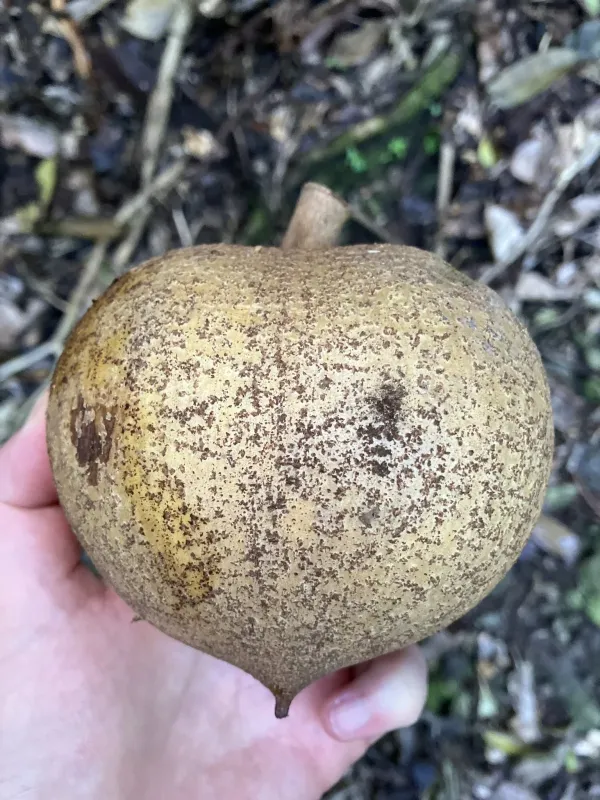
The fruits are globose and measure up to 20 cm in diameter, containing a thick skin and juicy, fragrant flesh. The flavor is often described as a blend of apricot, peach, and citrus, making it highly desirable.
Culinary uses are vast: the flesh is consumed fresh or processed into jams, jellies, juices, and desserts. The fruit is popular in regional cuisines across the Caribbean and Central America.
The wood of the tree is extremely hard and durable, resistant to rot and termites. It is frequently utilized in furniture making, tool handle production, and general light construction in rural tropical areas.
Various parts of the tree, including the seeds and bark, contain phytochemicals such as coumarins. These substances have traditional medicinal applications as antiparasitics and have been explored for cosmetic properties.
Main diseases and pests
The Mamey apple is generally robust, but it can be susceptible to fungal infections if the planting site lacks proper soil drainage or if air circulation within the canopy is insufficient.
Common pests include scale insects and mealybugs, which can colonize the foliage and branches. Regular monitoring and the removal of infested twigs help manage these populations effectively.
In humid tropical environments, leaf spot diseases can occur. Preventive measures include maintaining adequate spacing between trees and performing regular pruning to allow light and air into the crown.
Chemical control is rarely necessary if the orchard management practices are sound. Integrated pest management, focusing on natural predators, is the preferred strategy for sustainable production.
The tree's health is also tied to proper nutrition. Nutrient deficiencies may predispose the tree to secondary attacks by minor pests, highlighting the importance of regular soil analysis and fertilization.
Harvesting
Harvesting the Mamey apple requires a delicate touch. Because the fruit is heavy, it must be harvested by hand to prevent bruising or skin rupture upon hitting the ground, which would compromise quality.
Maturity is indicated by a subtle color change in the skin. Farmers typically use pole clippers to reach fruits located high in the canopy, ensuring each fruit is handled with care to maintain its integrity.
Post-harvest, the fruits require a brief period of ripening at room temperature. Proper airflow during this stage is essential to ensure uniform ripening and to prevent the development of spoilage organisms.
Large-scale orchards often perform multiple harvests throughout the season, as flowering and maturation times can vary significantly between individual trees within the same plantation.
Once harvested, the fruits should be sorted and cleaned of any residual milky latex that exudes from the stalk area. They are then packed in well-ventilated crates for transport to ensure they arrive at the market in optimal condition.