
Malope trifida
Malope trifida Cav.
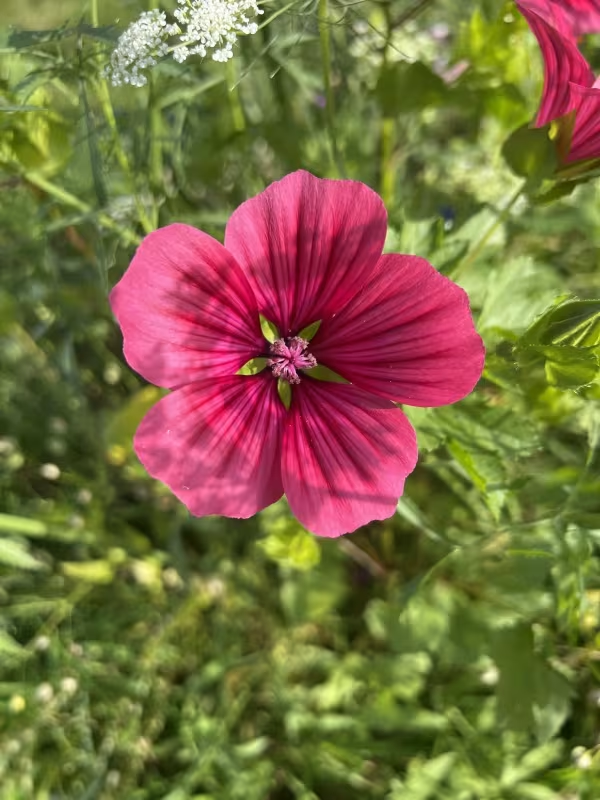
Description
Sowing dates
Malope trifida is a beautiful annual plant belonging to the Malvaceae family. Sowing in open ground should be carried out from mid-April to early May, ensuring the soil has warmed up sufficiently.
For earlier flowering, seeds can be started indoors in pots during March. It is essential to use a light, well-draining seed-starting mix to ensure healthy development of the root system.
When transplanting into the garden, spacing is crucial for this vigorous plant. Keep a distance of 30–40 cm between plants to allow for proper air circulation and lateral branching.
Seeds should be sown at a depth of about 0.5–1 cm. Under optimal conditions, germination typically occurs within two weeks, requiring constant but not excessive moisture.
Once established, the plants grow rapidly. It is recommended to place them in their final growing position as soon as the danger of frost has completely passed.
Growing requirements
Malope trifida thrives in sunny, open locations. Sufficient sunlight is necessary for the plant to produce its vibrant, characteristic funnel-shaped flowers throughout the summer.
The species prefers fertile, light, and well-drained soil. It performs best in neutral pH conditions and does not tolerate soil compaction or waterlogging, which can cause root rot.
While the plant is relatively drought-tolerant, consistent watering during dry spells will improve both growth and the duration of the blooming period significantly.
Applying a balanced fertilizer every few weeks during the growing season will help maintain plant vigor. Avoid excessive nitrogen, which can lead to lush foliage but fewer flowers.
Given its height and structure, planting in a location sheltered from strong gusts is advisable. If necessary, simple garden stakes can be used to support the primary stems.
Main diseases and pests
Like many plants in the mallow family, Malope trifida can be susceptible to fungal diseases such as powdery mildew, especially in humid or stagnant air environments.
Ensuring proper spacing between plants is the most effective preventative measure. If an outbreak occurs, removing affected leaves and using a suitable fungicide is recommended.
Common pests include aphids and spider mites, which can cause leaf yellowing and stunted growth. These pests are often found on the undersides of leaves or near flower buds.
Biological pest control or mild insecticidal soaps are usually effective against these threats. Regular monitoring of the foliage ensures early detection and immediate management.
Good garden hygiene, such as removing debris and weeds around the base of the plant, minimizes the risk of pest infestations and fungal spores overwintering in the area.