
Malabaila graveolens
Malabaila graveolens
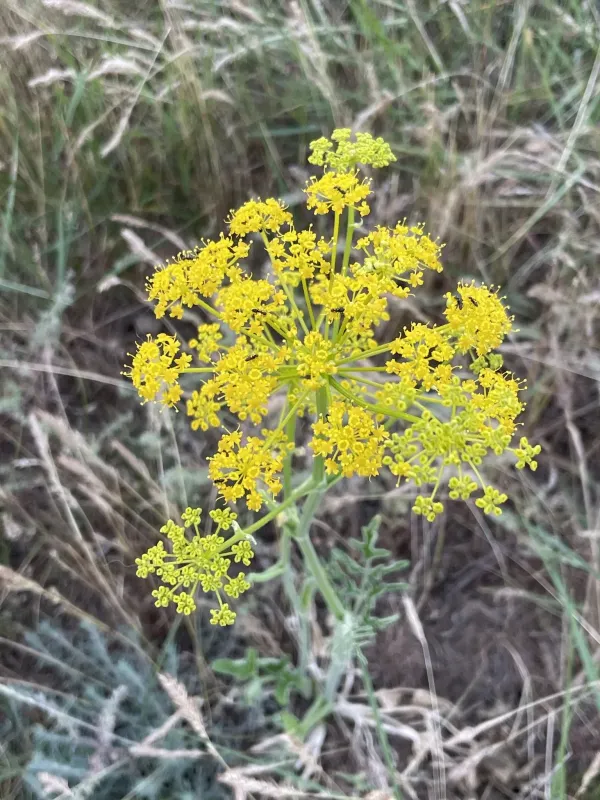
Description
Sowing dates
Malabaila graveolens is a perennial herbaceous crop that requires specific conditions for successful establishment from seeds.
Autumn sowing is often preferred to allow for natural stratification, which is crucial for overcoming seed dormancy and ensuring uniform emergence.
Seeds should be sown at a depth of 1–2 centimeters in well-prepared, fine-textured soil to facilitate optimal root contact.
Row spacing of 45 to 60 centimeters is recommended to provide sufficient space for plant development and allow for mechanical inter-row cultivation.
During the first year, the plant focuses on developing a robust basal rosette, while vigorous stem elongation occurs in subsequent years.
Growing requirements
The plant thrives in sunny, open locations, as exposure to direct sunlight is vital for maximizing the production of essential oils.
Well-drained, fertile loamy soils with a neutral pH provide the best environment for the plant to reach its full growth potential.
While relatively hardy, the plant benefits from consistent moisture levels during the active vegetative growth stage in spring.
Routine weed control and soil aeration are essential practices to ensure that the root system has access to oxygen and nutrients.
Excessive moisture in the soil profile should be avoided to prevent root decay, especially in heavier soil types during winter months.
Yield
The yield of Malabaila graveolens is determined by the plant's overall health and the management practices employed throughout the season.
Maximum biomass production is achieved during the peak flowering stage, making this the most productive time for harvesting aerial parts.
Proper nutrient management, including potassium and phosphorus application, supports strong stem development and increases total yield.
The yield potential increases as the plant establishes a larger and more complex root system over several years of cultivation.
Processing efficiency depends on the timely harvest of raw material to ensure the highest possible concentration of active compounds.
Main diseases and pests
Like many members of the Apiaceae family, the plant is susceptible to powdery mildew, especially in humid and poorly ventilated conditions.
Root-feeding larvae, such as wireworms, can damage the crown of the plant and open infection sites for soil-borne pathogens.
Monitoring for fungal leaf spots is critical, as these can significantly reduce the quality and market value of the harvested foliage.
Crop rotation protocols are necessary to break pest and disease cycles that may build up in the soil over consecutive seasons.
- Field surveillance for insects.
- Preventive fungicide application.
- Removal of infected debris.
Harvesting
Harvesting for essential oil extraction should coincide with the peak flowering period when oil content is at its absolute highest.
The aerial parts are harvested by cutting the stems, taking care to leave the basal foliage intact for the plant's future vigor.
Immediate handling of harvested material is essential to prevent the volatilization of aromatic oils due to heat or prolonged exposure.
Drying the material in shaded, well-ventilated areas preserves the structural integrity and quality of the dried herb product.
Roots should be harvested during the dormant season, thoroughly cleaned of soil, and dried at low temperatures to ensure stability.