
Honeybells
Mahernia verticillata
Description
Growing requirements
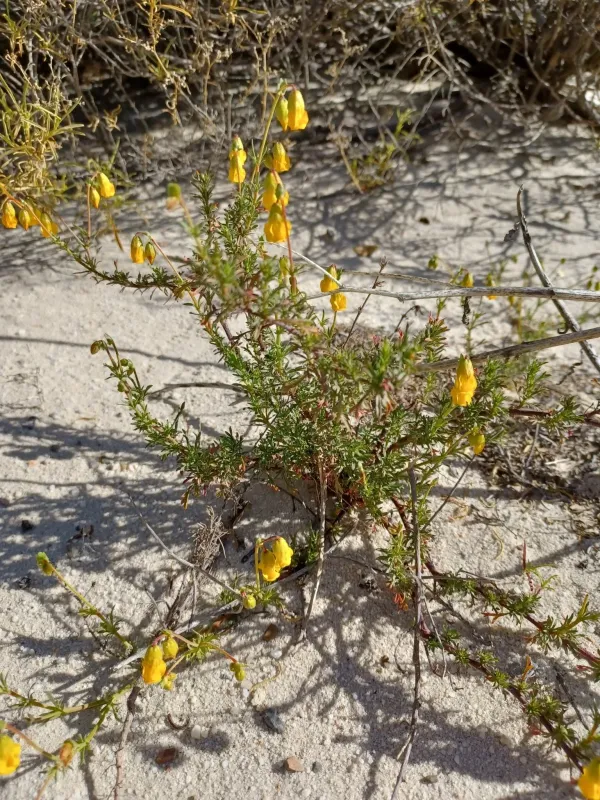
Mahernia verticillata, commonly known as Honeybells, belongs to the Malvaceae family. This evergreen perennial originates from South Africa and is highly valued for its exceptional ornamental qualities and long, fragrant flowering season.
This crop prefers well-draining, light sandy, or loamy soils with a neutral to slightly acidic pH. A critical condition for successful growth is the absence of waterlogging, as the plant's root system is extremely sensitive to excess moisture and prone to root rot.
The plant is highly light-demanding, requiring bright, direct light to ensure abundant flowering and a compact, dense growth habit. While it can tolerate partial shade, insufficient light often leads to leggy stems and a significant reduction in bud formation.
Honeybells possess moderate drought tolerance, a trait inherited from its arid natural habitat. During the active growing season, it requires regular but moderate watering, whereas in winter, the moisture requirements of the plant decrease significantly.
Temperature is a limiting factor: the species is not frost-hardy. The optimal development range is between +18°C and +25°C. In colder climates, it is grown strictly as a container plant, necessitating a move to a protected indoor environment before the first frosts.
Yield
In agricultural and horticultural use, Mahernia is prized not for edible yields but for its aesthetic value. It is widely used in vertical gardening, as part of hanging basket displays, and as a groundcover in greenhouse settings.
The plant is famous for its sweet, honey-chocolate scent, making it a popular choice for patios and terrace arrangements. Its ability to quickly produce biomass makes it an excellent choice for creating lush green carpets in confined landscape areas.
The biological value of the culture also lies in its role as a honey plant in warmer climates. Due to its extended flowering period, which can last from spring through autumn, it provides consistent nectar sources for local pollinators throughout the warm season.
Mahernia is easily propagated via stem cuttings, facilitating rapid scaling in nursery production. The rooting process is generally swift, provided that stable temperatures and moderate substrate humidity are maintained.
Regular pruning of spent blooms is recommended to maintain a tidy appearance. This practice stimulates the growth of lateral branches, resulting in a fuller, more vigorous shrub with a higher density of flower clusters.
Main diseases and pests
The main pests that affect the crop under poor management conditions include spider mites and whiteflies. These are particularly problematic in greenhouse environments where air humidity is low and ventilation is inadequate.
Fungal diseases, such as root rot and grey mold, occur exclusively due to overwatering and insufficient soil drainage. To prevent these, it is crucial to avoid wetting the foliage in the evenings and to maintain proper drainage in the pots.
- Ensuring excellent air circulation around the canopy.
- Regular monitoring of the leaf undersides for early signs of pest infestation.
- Timely disinfection of pruning tools to prevent disease spread.
- Using sterile, high-quality potting substrates during transplantation.