
Yunnan Hybrid Magnolia
Magnolia yunnanensis x figo
Description
Growing requirements
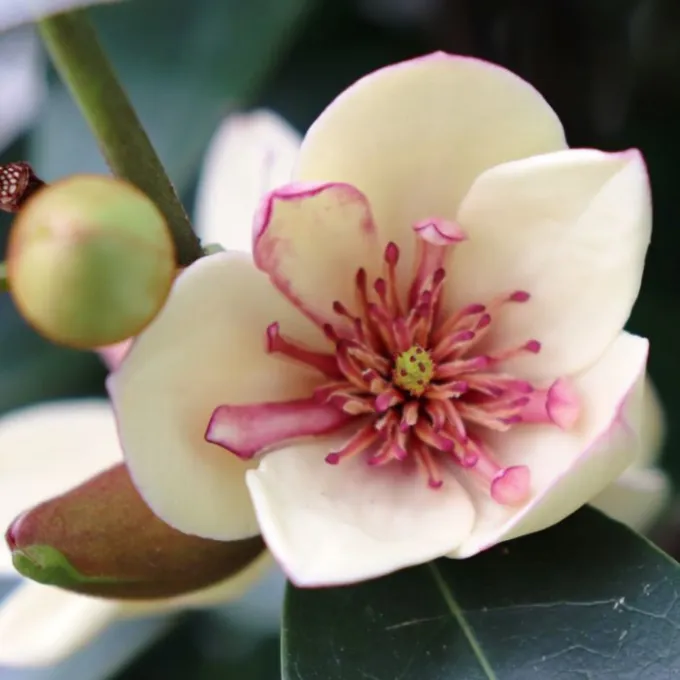
The Yunnan Hybrid Magnolia (Magnolia yunnanensis x figo) is a member of the Magnoliaceae family. This hybrid is prized by horticulturists for its elegant appearance and the high aromatic quality of its blossoms, which resemble the characteristic scent of its parents.
The plant thrives in well-drained, fertile soil that maintains a slightly acidic pH level. Proper drainage is absolutely critical, as these plants are highly sensitive to waterlogged conditions, which can quickly trigger root rot.
Optimal growth requires a sheltered location with partial to full sun exposure, protected from harsh, desiccating winds. In temperate regions, it is essential to ensure the plant is established in a position that offers protection during winter frost events.
Regular irrigation is vital during the growing season, particularly for young specimens. Using soft water is recommended to avoid altering the soil chemistry, as excessive calcium can lead to nutrient deficiencies.
This species is widely used for ornamental purposes in garden landscaping and botanical collections. Its dense foliage and evergreen nature make it an excellent choice for creating privacy screens or focal points in smaller garden spaces.
Main diseases and pests
Common fungal pathogens include powdery mildew and anthracnose, which are favored by high humidity and poor air circulation. Effective management involves using specialized fungicides and ensuring the canopy remains adequately aerated.
Pests such as scale insects, spider mites, and aphids can significantly impact plant vigor. Regular monitoring and the application of horticultural oils or systemic insecticides are standard procedures for managing these infestations.
Chlorosis is a frequent physiological disorder observed when the soil pH is too high, inhibiting iron uptake. Regular soil testing and the addition of chelated iron supplements are essential for maintaining healthy, deep green foliage.
Mulching the root zone with pine needles or acidic bark helps preserve moisture and creates a more favorable environment for the root system. This practice also helps in suppressing weeds that compete for soil nutrients.
Structural damage from heavy snow or high winds can create entry points for pathogens. Maintaining a healthy, balanced crown through careful pruning ensures the tree remains robust and resistant to environmental stress factors.