
Magnolia laevifolia
Magnolia laevifolia (Y. W. Law & Y. F. Wu) Noot.
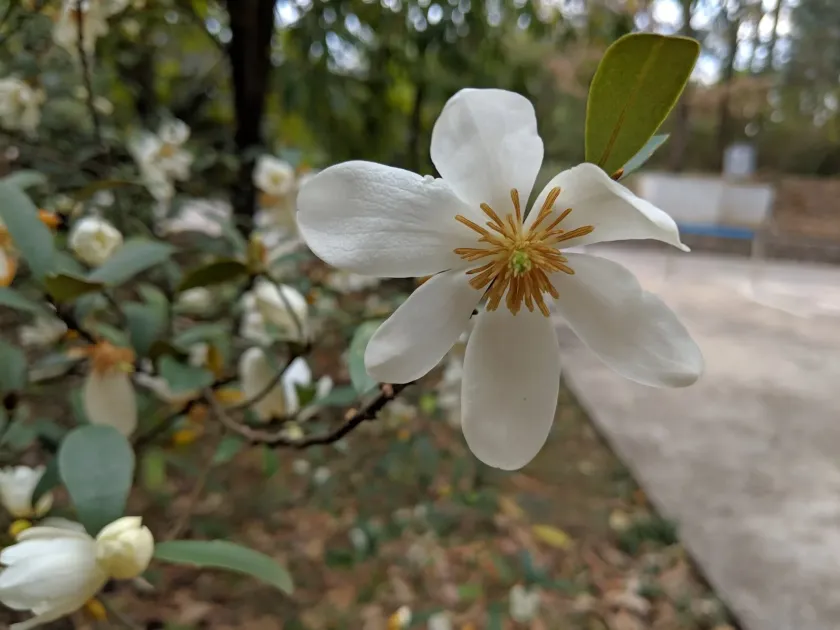
Description
Growing requirements
Magnolia laevifolia, a member of the Magnoliaceae family, is a versatile evergreen shrub originating from the subtropical regions of China. Known for its thick, glossy foliage and fragrant flowers, it has become a popular choice for ornamental cultivation.
This species thrives in temperate to subtropical climates. It is best suited for sheltered positions that protect it from harsh drying winds and intense, direct sunlight, which can scorch the leaves during mid-summer peak hours.
The soil requirements for optimal growth are well-drained, acidic to neutral, and rich in organic matter. A mixture of peat, loam, and coarse grit is often used to ensure excellent root aeration and to prevent the common issue of waterlogging.
Water management is crucial during the plant's establishment phase. Consistency is key, as the root system is sensitive to both prolonged drought and excessive water saturation, which can lead to significant physiological stress.
Regular maintenance involves light pruning to preserve the desired shape and size. As an evergreen, it responds well to structural pruning performed immediately after the flowering period to encourage bushy, dense growth for the next season.
Main diseases and pests
Fungal leaf spot diseases are common when humidity levels are high and air circulation is poor. Effective management requires maintaining adequate spacing between individual plants and ensuring the foliage remains dry as much as possible.
Scale insects frequently target the stems of Magnolia laevifolia, draining the plant's resources. Control measures include systemic insecticides or horticultural oils applied during the dormant stage to disrupt the life cycle of the pests.
Iron deficiency-induced chlorosis is a frequent disorder in high-pH or alkaline soils. Plants exhibit yellowing leaves with green veins; this is managed by incorporating chelated iron into the soil or through foliar feeding applications.
Aphids can appear in early spring, colonizing the tender new growth. While they are rarely fatal, they can cause leaf curling and serve as vectors for secondary viral infections, necessitating prompt intervention with mild soap-based sprays.
Root rot, typically caused by Phytophthora species, is a severe threat in poorly drained soils. Once detected, the affected root zone must be treated with appropriate soil fungicides, and the drainage system must be completely rectified.