
Magnolia laevifolia x Magnolia doltsopa
Magnolia laevifolia x Magnolia doltsopa
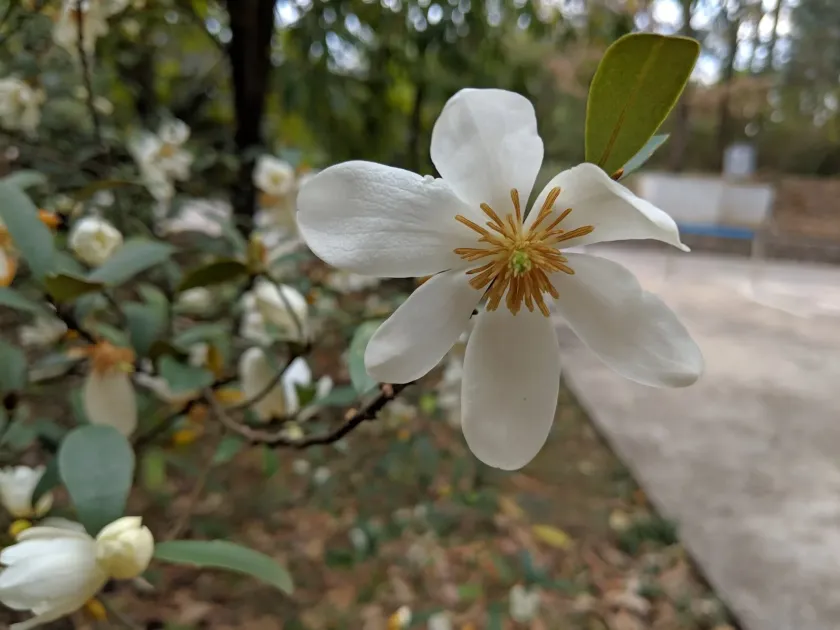
Description
Growing requirements
Magnolia laevifolia x Magnolia doltsopa is a distinct hybrid member of the Magnoliaceae family. This cultivar is prized for its evergreen foliage and fragrant flowers, making it a desirable specimen for temperate garden climates.
The plant thrives in locations that offer partial shade and protection from harsh prevailing winds. In colder regions, planting against a sheltered wall helps to preserve the structural integrity of the branches during late frost events.
Soil quality is paramount for this species; it requires a well-drained, acidic to neutral soil rich in organic matter. Amending the planting hole with peat moss or pine bark can effectively create the optimal root environment.
Regular irrigation is essential, especially during the first few years of establishment. However, the soil must never remain waterlogged, as the roots are highly susceptible to oxygen deprivation and subsequent decay in saturated conditions.
Fertilization should be handled carefully, using balanced slow-release fertilizers formulated for acid-loving shrubs. Applying these in early spring before the onset of the main growth flush ensures vigorous health throughout the season.
Main diseases and pests
Fungal infections, such as powdery mildew or leaf spot, frequently occur when air circulation around the canopy is insufficient. Thinning the center of the plant can improve airflow and reduce humidity around the foliage.
Scale insects represent a significant pest threat, often hiding on the underside of leaves or along stems. Regular inspection and the application of horticultural oils during the dormant season can effectively manage these infestations.
Root rot caused by Phytophthora species is a major risk factor if the drainage is inadequate. Once infected, it is very difficult to save the plant, making proactive soil management the best form of defense.
Aphid colonies may target tender new growth during the spring months. While generally not lethal, heavy infestations can weaken the plant and lead to secondary issues like sooty mold accumulation on the leaves.
Chlorosis, indicated by the yellowing of leaves between green veins, is common in soils with a pH that is too high. Supplementing with chelated iron or applying organic matter can often resolve these nutrient deficiency symptoms.