
Magnolia denudata
Magnolia denudata Desr.
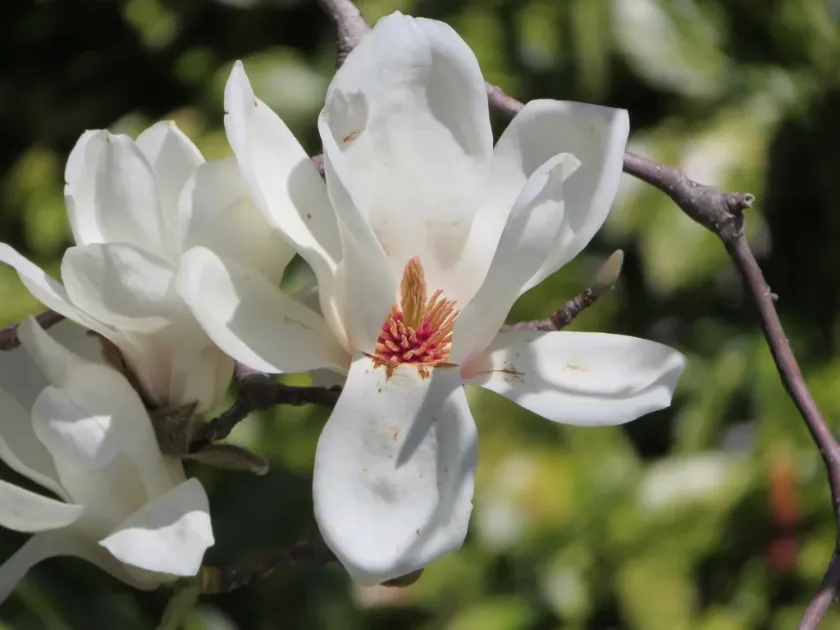
Description
Growing requirements
Magnolia denudata, commonly known as the Yulan magnolia, is a deciduous tree belonging to the Magnoliaceae family. Native to central and eastern China, it is highly prized for its large, fragrant, cup-shaped white flowers.
The plant thrives in deep, fertile, and well-drained soils. It prefers a slightly acidic to neutral substrate, as highly alkaline soils often induce iron deficiency chlorosis in the foliage.
Choosing a site with full sun to partial shade is essential for optimal flowering. The location should be sheltered from strong, cold winds that can damage the early-blooming buds in late winter or early spring.
Proper water management is critical; while mature trees are somewhat drought-tolerant, young specimens require consistent irrigation to establish a robust root system.
In landscaping, it is used as a specimen tree or a focal point. Its historical and cultural significance in East Asia makes it a classic choice for traditional and modern gardens alike.
Main diseases and pests
Fungal leaf spots are common in humid environments, causing brown or black lesions on foliage. Proper spacing and airflow are crucial to minimize this issue.
Verticillium wilt is a serious soil-borne disease that can cause sudden wilting and dieback of branches. Prevention involves avoiding root damage and ensuring good soil drainage.
Scale insects are frequent pests that attach to the bark of branches. They extract sap and excrete honeydew, which often leads to the growth of unsightly sooty mold.
Aphids often target new spring growth, causing leaf curling and stunted development. If untreated, high populations can significantly stress the young tree.
Effective management includes integrated pest control strategies: periodic inspection, removal of infected branches, and the use of horticultural oils when necessary.