
Anredera cordifolia
Anredera cordifolia (Ten.) Steenis
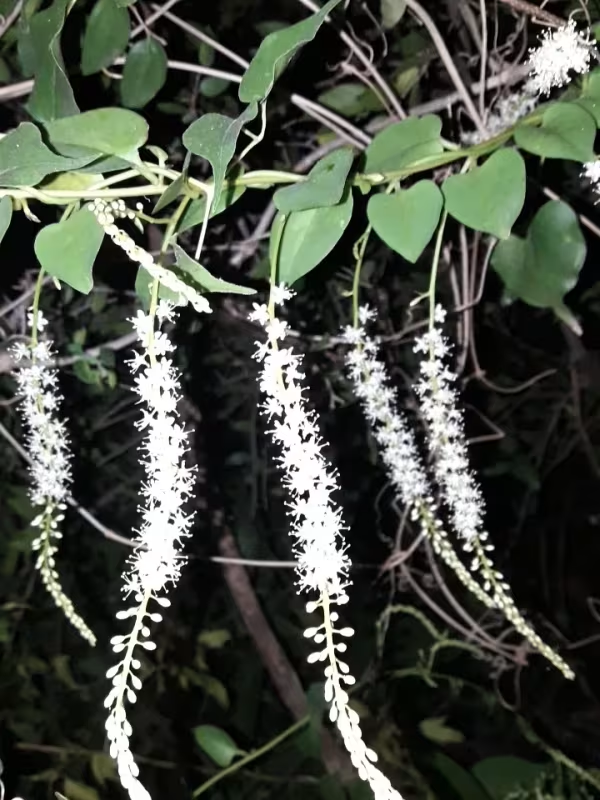
Description
Sowing dates
Anredera cordifolia is primarily propagated through its aerial or ground tubers, which are formed abundantly along the stems and root system.
Planting typically takes place in early spring once the soil temperature is consistently above 15°C, ensuring protection from late frosts.
Seed propagation is rarely utilized in practical agriculture due to the plant's high efficiency in vegetative reproduction via tubers.
In controlled greenhouse environments, planting schedules can be adjusted to maximize the vegetative growth period throughout the year.
Tubers should be planted at a depth of 3–5 cm, providing sufficient spacing of at least 40 cm between individual plants to accommodate rapid growth.
Growing requirements
As a member of the Basellaceae family, this plant is a vigorous, sun-loving climber that thrives in warm, temperate to tropical climates.
It prefers fertile, well-draining soils with a neutral pH, as the tubers are highly susceptible to rot in waterlogged or heavy clay conditions.
The plant requires sturdy support structures such as trellises or fences to allow its twining stems to develop fully and reach maximum length.
Regular irrigation is essential during the active growing season, although the soil should be allowed to dry slightly between water applications.
Since the species is not frost-tolerant, the tubers must be harvested or protected during winter in regions with freezing temperatures.
Yield
The yield of Anredera cordifolia is measured by both the biomass of its edible foliage and the production of numerous starch-rich tubers.
Under optimal light and nutrient conditions, a single well-established plant can produce dozens of tubers within a single growing season.
The plant demonstrates high biological productivity, making it a viable option for both ornamental gardening and as an unconventional food crop.
Intensive cultivation practices, including balanced organic fertilization, can significantly increase the total weight of harvested tuber crops.
Consistent growth and proper pruning can further enhance the plant's energy allocation towards tuber development before the onset of dormancy.
Main diseases and pests
Fungal infections are the most common issue, usually resulting from inadequate air circulation or excessively damp growing environments.
Root and tuber rot represent significant threats to plant health and are almost exclusively caused by overwatering or poorly drained soil.
Pests such as aphids and spider mites can infest the foliage, particularly when plants are grown in confined or overly dry conditions.
Effective management includes maintaining proper spacing between plants and implementing preventive measures to ensure optimal airflow.
Integrated pest management, favoring biological controls over chemical pesticides, is recommended to preserve the safety of the harvest.
Harvesting
Harvesting of the tubers occurs at the end of the growing season when the foliage naturally turns yellow and begins to wither and dry.
The stems should be carefully pruned, followed by the gentle excavation of the soil to remove the tubers without causing physical damage.
Once harvested, the tubers should be cured in a dry, shaded area for several days to prepare them for long-term storage.
Ideal storage involves keeping the tubers in a cool, dark environment packed in slightly moist sand to prevent dehydration during dormancy.
The fresh, succulent leaves can be picked throughout the summer months as needed, providing a steady supply of edible greens.