
Macrosyringion longiflorum
Macrosyringion longiflorum
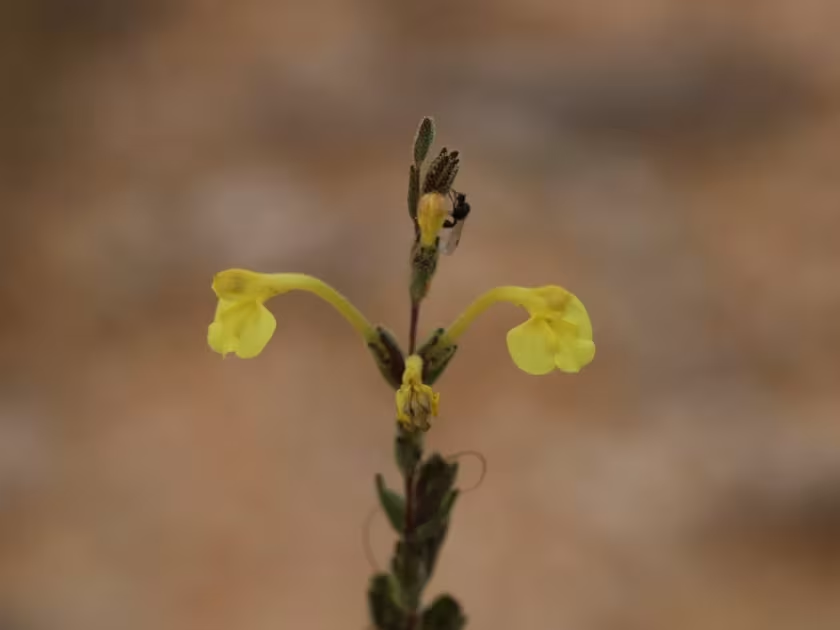
Description
Sowing dates
Macrosyringion longiflorum is a distinctive hemiparasitic plant belonging to the Orobanchaceae family. Unlike conventional agricultural crops, it does not rely on traditional sowing methods but rather on the presence of specific host plants to establish a successful connection.
The life cycle begins with the germination of seeds in the soil, triggered by chemical signals released by the roots of potential host species. This specialized adaptation ensures that the plant develops only in the presence of a viable nutrient source.
Botanically, the plant is characterized by its elongated, tubular flowers and its ability to draw water and essential minerals from the vascular system of the host. Its development is inherently tied to the health and growth stages of these host plants.
Researching this species provides significant insights into plant interactions and the complex evolutionary strategies of parasitic flora. Scientists study its growth patterns to better understand how such plants integrate into diverse plant communities.
While not a standard industrial crop, the study of its biological requirements is essential for conservation efforts and for managing ecosystems where this species plays a role in regulating the density of host vegetation.
Growing requirements
The plant requires well-drained, nutrient-poor soil, often thriving in calcareous or rocky substrates characteristic of its native habitat. It does not perform well in fertile, heavily amended agricultural soils that are common for traditional crops.
High exposure to sunlight is critical for the development of Macrosyringion longiflorum. It is highly intolerant of shade and requires an open environment where it can effectively compete and connect with host roots in full light.
Climatic conditions must include a pronounced dry season, which the plant survives by relying on the stored resources acquired from the host plant. It is well-adapted to temperate and Mediterranean climates with seasonal variability.
Maintenance of the natural soil structure is vital, as the delicate haustorial connections between the parasite and the host are sensitive to mechanical disruption. Excessive tilling can destroy these essential root links.
Agrotechnical management in areas where this species exists involves the avoidance of excessive fertilizer applications. Maintaining the ecological balance is key to ensuring that the host species remain healthy and capable of supporting the parasite.
Main diseases and pests
The most significant threat to Macrosyringion longiflorum is habitat destruction due to agricultural expansion. Large-scale tilling and the conversion of steppes into arable land lead to the fragmentation and loss of its natural populations.
Chemical weed control programs using herbicides pose an existential risk to this species. Because it is closely integrated with host plants, broad-spectrum chemical agents can inadvertently eliminate the parasite alongside common weeds.
Fungal infections affecting the host plants are a major physiological threat. If the host's root system is compromised by pathogens, the nutrient supply to the hemiparasite is severed, leading to rapid decline.
Invasive species that outcompete the preferred host plants can also negatively impact the survival of Macrosyringion longiflorum. A loss of appropriate host biodiversity directly limits the establishment success of the species.
- Land cultivation and habitat degradation.
- Misuse of broad-spectrum herbicides.
- Root-rot diseases in host vegetation.
- Shifts in land management and grazing practices.