
Marsh clubmoss
Lycopodiella inundata
Description
Growing requirements
The Marsh clubmoss (Lycopodiella inundata) is a perennial, spore-bearing vascular plant belonging to the Lycopodiaceae family. It is typically found in nutrient-poor, moist environments such as heathlands, bog margins, and areas with periodic flooding where mineral soils are exposed.
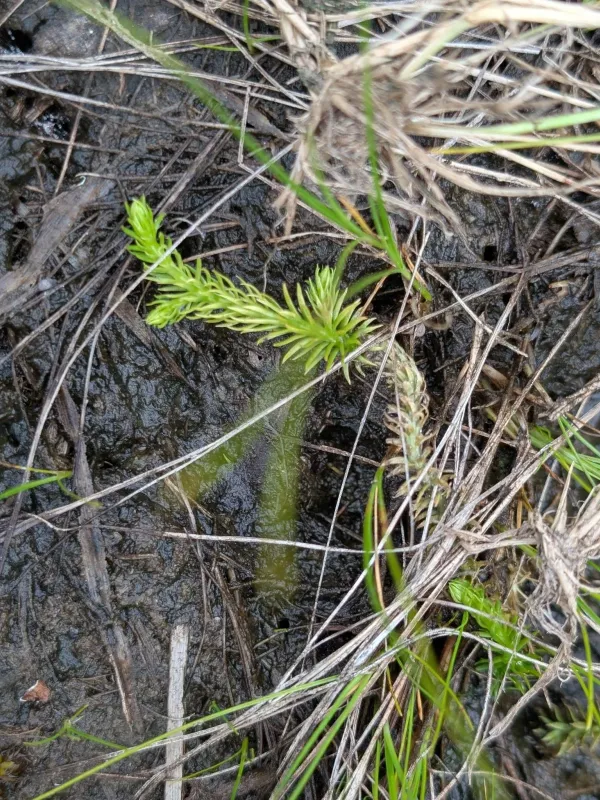
Morphologically, the plant is characterized by a creeping, prostrate stem that produces vertical, yellowish-green leaves. Unlike many of its relatives, the sporophylls are sessile and formed at the tips of the vegetative shoots, creating a distinct club-shaped structure that gives the plant its common name.
Ecological requirements for this species are quite specific: it demands high light levels, acidic substrates (often peat or sand), and consistently moist soil conditions. It is a poor competitor against faster-growing vascular plants, which is why it thrives in niches created by disturbances like flooding or erosion, where the vegetation cover is sparse.
Cultivation attempts for this species in specialized nursery conditions emphasize the importance of maintaining an acidic pH level and a constant, stable water supply. It is crucial to prevent the substrate from drying out while simultaneously avoiding stagnant, nutrient-rich water that could favor the growth of invasive algae or competitive weeds.
While not a traditional agricultural crop, the species is of significant interest to conservationists and restoration ecologists. It acts as an indicator of healthy, nutrient-poor wetland habitats and is frequently included in biodiversity management programs aimed at restoring degraded bog and heathland ecosystems.
Main diseases and pests
The main threats to the population include the drainage of wetlands for agricultural purposes, peatland destruction, and atmospheric nitrogen deposition, which encourages the growth of more aggressive plant species. Furthermore, climate-driven changes in groundwater levels can prove fatal to this specialized plant.