
Luzuriaga parviflora
Luzuriaga parviflora
Description
Growing requirements
Luzuriaga parviflora is a distinct evergreen perennial shrub belonging to the Alstroemeriaceae family. Native to the cool, temperate rainforests of New Zealand, this plant is characterized by its delicate growth habit and year-round ornamental foliage.
To cultivate this plant successfully, one must replicate its natural woodland environment. It thrives best in moisture-retentive, acidic to neutral soils enriched with leaf mold or compost. Proper soil aeration is essential to prevent root suffocation, especially in container gardening.
Climate requirements for Luzuriaga parviflora are quite specific; it favors cool, maritime conditions with high atmospheric humidity. It is essential to protect the plants from harsh afternoon sun and desiccating winds, which can easily cause leaf scorch and branch tip dieback.
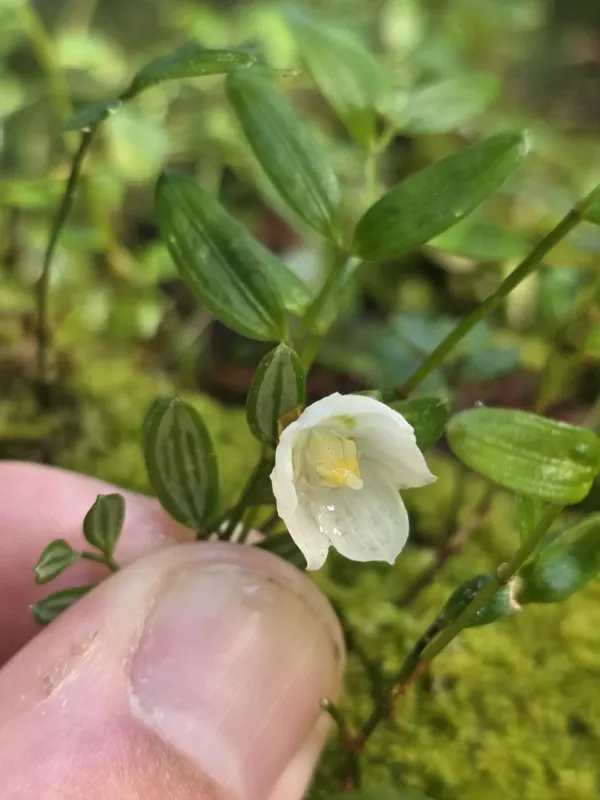
Botanically, the plant features slender, wiry stems that exhibit a semi-prostrate or creeping growth habit. Its dark green, lanceolate leaves are arranged along the stems, creating a dense and refined texture that makes it an excellent choice for ground cover in shaded landscape designs.
The plant produces charming, cup-shaped white flowers with waxy petals during the flowering season. Following pollination, it develops small, rounded fruits that transition from green to shades of orange or red, providing a significant aesthetic appeal to the understory planting.
Main diseases and pests
The primary threats to this species include root rot pathogens, which thrive in stagnant, waterlogged conditions. It is crucial to ensure excellent drainage in the planting site and to allow the upper layer of the soil to dry out slightly between irrigation cycles.
Slugs and snails are the most prominent pests, particularly targeting the succulent young stems and foliage during damp weather. Implementing integrated pest management, such as clear debris removal and physical barriers, is highly recommended to preserve the plant's structural integrity.