
Field woodrush
Luzula campestris (L.) DC.
Description
Growing requirements
Field woodrush (Luzula campestris) is a perennial herbaceous plant belonging to the Juncaceae family. It is known for its ability to form compact tussocks, making it a stable component of natural grasslands and meadows.
The plant thrives in acidic to neutral soils that are well-drained yet maintain adequate moisture levels. It is commonly found in a variety of environments, including open pastures, meadows, and partially shaded forest margins.
Adaptability to temperate climates is a key characteristic of this species. It exhibits excellent winter hardiness, allowing it to begin growth immediately after the snow melts in early spring, which is a major advantage for forage availability.
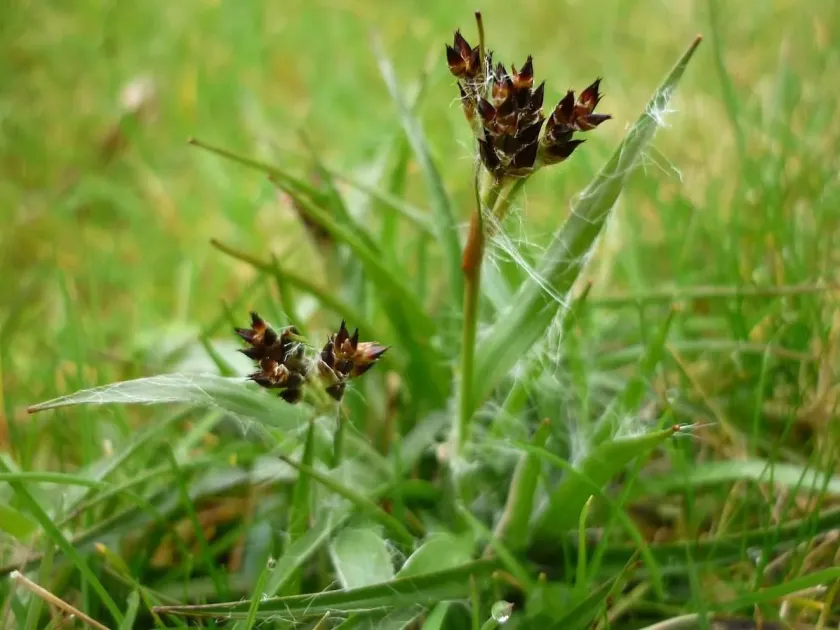
Botanically, it is distinguished by its narrow leaves with characteristic ciliate hairs along the margins. The flowering stalks support dense, head-like inflorescences, and the plant spreads effectively through its rhizome system.
Agricultural use of Field woodrush is primarily focused on its value as a component of early-season grazing land. It provides high-quality early greenery for livestock before many other perennial grasses have reached their peak growth phase.
Main diseases and pests
Field woodrush is generally resistant to most common crop diseases. Its natural resilience allows it to survive in various conditions without the need for intensive chemical plant protection products.
The main threats to the species involve changes in land management, such as severe soil compaction or prolonged drought, which can inhibit its growth and weaken the established tussocks over time.
Competition from invasive or highly aggressive plant species represents a significant threat during the establishment phase. Proper grazing management is essential to maintain the dominance of woodrush in a pasture.
Overgrazing can lead to the degradation of the plant community if the stocking density is not regulated. Providing rest periods for the grassland allows the root system to recover and maintain its structure.
While few insects specifically target this plant, monitoring for generalist pests in the surrounding ecosystem is recommended, especially in dense mixed grasslands where pest populations can fluctuate.