
Regal lupine
Lupinus regalis
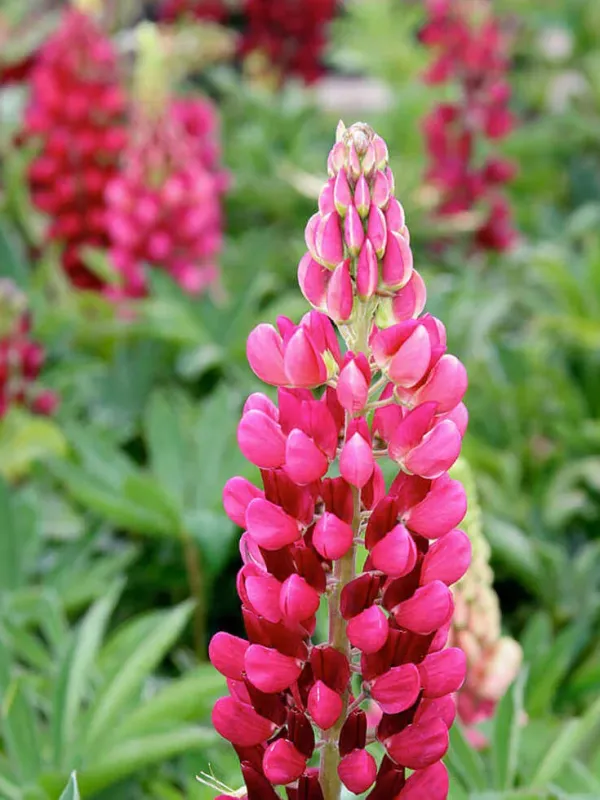
Description
Sowing dates
Sowing of Regal lupine is best performed in early spring as soon as the soil warms up to 5–7 degrees Celsius. Timely planting is crucial to utilize the winter moisture stored in the soil, which is essential for uniform germination and early plant establishment.
The optimal planting depth ranges from 3 to 5 centimeters, depending on the soil texture. Lighter sandy soils require deeper planting to ensure moisture access, while heavier clay soils call for shallower placement to facilitate root aeration and sprout emergence.
Seeding rates depend on the intended use of the crop. Higher densities are preferred for biomass production and green manure, while lower densities are used for seed multiplication to allow individual plants to maximize their pod production.
Inoculation of seeds with specific rhizobial bacteria is a mandatory practice before sowing. This process enables efficient biological nitrogen fixation, significantly reducing the need for synthetic nitrogen fertilizers while boosting crop vigor.
Row spacing is typically set between 15 and 30 centimeters. Narrow-row planting is increasingly common in intensive agricultural systems, as it promotes rapid canopy closure, which suppresses weed growth and improves the overall efficiency of the land use.
Growing requirements
Regal lupine belongs to the Fabaceae family and is recognized for its significant role in sustainable agriculture. It adapts well to temperate climates and demonstrates good resilience to mild frost during the early stages of its vegetative cycle.
The crop thrives in slightly acidic to neutral soils with good drainage and oxygen availability. Extreme alkalinity or high lime content in the soil can trigger chlorosis, negatively impacting the plant's photosynthetic capacity and overall development.
Featuring a deep, robust taproot system, the plant can access water and nutrients from the lower soil profile, making it a drought-tolerant option for dryland farming. This root structure also helps break up compacted soil layers, improving the site for subsequent crops.
Optimal growth occurs at temperatures between 18 and 22 degrees Celsius. Extreme heat during the flowering phase can adversely affect pod set and seed filling, which is why regions with stable temperate summers are the most suitable for cultivation.
Lupine is a light-demanding crop. Adequate solar radiation is necessary for the development of healthy stems and optimal pod filling. Shaded conditions lead to etiolated growth, reduced biomass, and lower resistance to environmental stresses.
Yield
The biomass yield of Regal lupine ranges from 25 to 40 tons per hectare, depending on soil quality and fertilization. This makes it an exceptionally efficient green manure crop for restoring organic matter to depleted agricultural soils.
Seed yields generally range from 2 to 3 tons per hectare. High protein content in the seeds, often exceeding 35 percent, classifies this crop as a valuable plant-based alternative to soybean meal in animal feed formulations.
Integrating lupine into the crop rotation cycle often increases the yields of subsequent cereals by 15–25 percent. The combined benefit of nitrogen fixation and soil conditioning provides a significant economic advantage beyond the immediate harvest value.
Effective weed management during the first month is critical to protect the young lupine plants. Once the crop reaches the stage of rapid vegetative growth, it becomes highly competitive and can effectively suppress most encroaching weeds.
Balanced phosphorus and potassium application is recommended to support robust pod development. Proper nutrient management ensures not only higher yields but also superior seed quality for both commercial feed and future planting stock.
Main diseases and pests
The most prevalent diseases affecting Regal lupine include anthracnose and Fusarium wilt. These pathogens thrive under warm, humid conditions and can cause severe damage to both root systems and stems, leading to significant yield losses if left untreated.
Pests such as the lupine aphid and seed weevils pose serious threats to the crop. Aphids deplete plant sap and can transmit viral infections, while weevil larvae can feed directly on the developing seeds, compromising both the quantity and quality of the harvest.
Integrated pest management strategies are essential, involving crop rotation and the use of fungicide-treated seeds. Avoiding consecutive planting of lupine on the same field for at least 4–5 years is a primary defense against soil-borne pathogens.
In cases of heavy pest infestation, systemic insecticides may be necessary during the early stages of development. It is vital to select products that are effective against the target pest while minimizing impact on local beneficial insects and pollinators.
Regular field scouting is a standard agricultural procedure for early detection of symptoms. Identifying infection hotspots allows for targeted interventions, which contain the spread and protect the overall health of the field until the harvest time.
Harvesting
Harvesting for green forage should take place during the full bloom stage. At this point, the plant contains the highest concentration of digestible proteins and minerals, providing maximum nutritional value for livestock feed.
For seed production, the harvest begins when 70–80 percent of the pods have matured and changed color, and seeds have hardened. Delays in harvesting can lead to pod shattering and significant losses of high-value seeds on the field surface.
The two-stage harvesting method is commonly employed: plants are first mowed into windrows to dry down. This technique ensures consistent moisture levels and reduces the mechanical damage to the seeds during the final threshing phase.
Combining equipment must be calibrated carefully to adjust cylinder speed and clearance. Because lupine seeds are relatively large and fragile, excessive mechanical force during threshing can cause cracking and lower the germination percentage.
Post-harvest conditioning includes thorough cleaning and drying to reach a moisture content of approximately 14–15 percent. This ensures stable storage conditions, allowing the seeds to maintain high viability and energy levels for subsequent planting seasons.