
Luina hypoleuca
Luina hypoleuca
Description
Growing requirements
Luina hypoleuca, commonly known as littleleaf silverback, is a herbaceous perennial belonging to the Asteraceae family. It is native to the Pacific Northwest region of North America, where it thrives in rocky, high-altitude habitats.
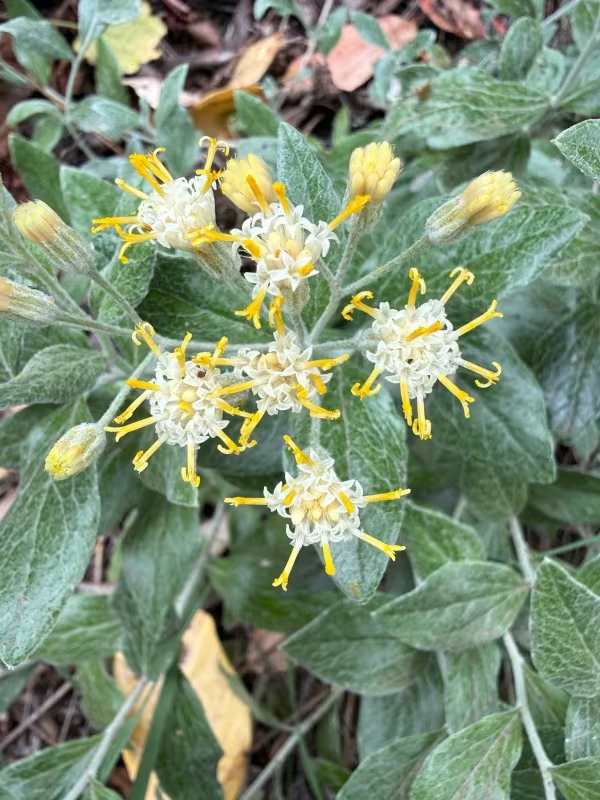
The plant is distinguished by its silvery-white tomentose foliage, which covers both the stems and leaves. This dense covering provides protection against harsh wind and excessive moisture loss in its native rocky environment.
Optimal growing conditions require full sun exposure and extremely well-drained, gritty soil. Luina hypoleuca performs best when treated as an alpine rock garden specimen, mimicking its natural mountainous distribution.
The climate requirements include moderate temperatures and cool nights, reflecting the conditions found at higher elevations. It is not suitable for regions with high humidity or swampy conditions, as these quickly lead to physiological stress.
In terms of use, it is primarily valued for its aesthetic appeal in landscape design. Its silver foliage offers a striking contrast to darker green plants, making it a desirable species for enthusiasts of xeriscaping and rock gardens.
Main diseases and pests
Root rot is the primary physiological threat to Luina hypoleuca in cultivation. It occurs almost exclusively in environments with poor drainage, where roots remain waterlogged for extended periods.
Pests such as aphids and spider mites can occasionally colonize the foliage during prolonged dry spells. If these infestations occur, they are typically managed by direct removal or mild insecticidal soaps.
Powdery mildew may develop if the plant is situated in a location with limited airflow and high humidity. Maintaining proper spacing between individual plants is essential to allow for adequate ventilation.
To mitigate the risk of disease, gardeners should focus on cultural control methods rather than chemical treatments. Avoiding irrigation over the foliage is a critical step in maintaining plant health and hygiene.
Regular monitoring of the soil moisture status is the most effective way to prevent threats. By ensuring the substrate dries out appropriately, one can sustain a healthy specimen for many seasons.