
Lotononis bainesii
Lotononis bainesii Baker
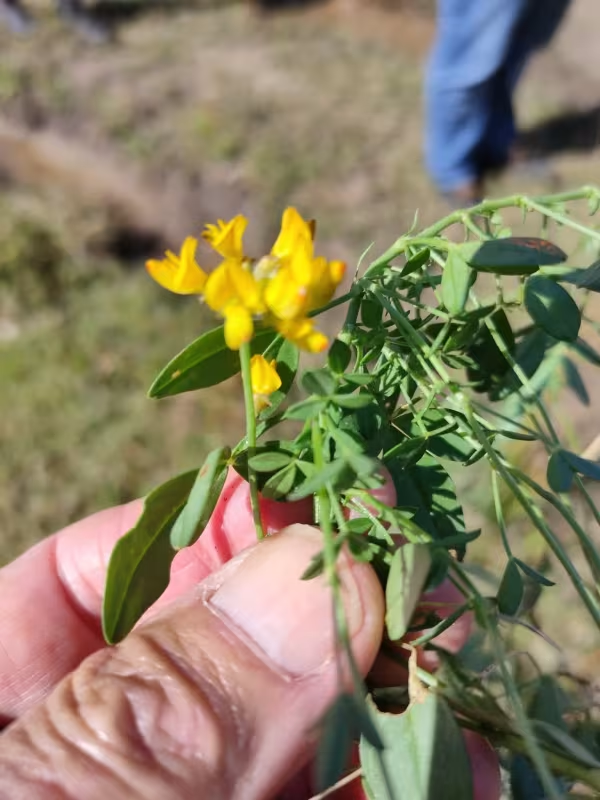
Description
Sowing dates
Lotononis bainesii is a perennial legume typically established in the spring or at the onset of the rainy season to ensure moisture availability for germination.
For successful establishment, soil temperatures should range between 20 and 25 degrees Celsius, promoting vigorous early-stage growth of the seedlings.
Seed size is quite small, necessitating shallow planting depths of approximately 0.5 to 1.0 centimeter to avoid burying the seeds too deeply.
Because the seeds possess a hard seed coat, pre-planting scarification is highly recommended to improve the rate and uniformity of germination in the field.
The seeding rate should be carefully calibrated based on the purity and viability of the batch to achieve a balanced and sustainable pasture density.
Growing requirements
Originating from Southern Africa, this crop is well-adapted to warm climates and exhibits significant tolerance to periods of drought and high temperatures.
The plant thrives in well-drained sandy or sandy-loam soils and is notably capable of growing in acidic, low-fertility soils where other legumes might fail.
Lotononis bainesii forms symbiotic relationships with effective Rhizobium strains, which allows it to fix atmospheric nitrogen and improve soil fertility.
High light intensity is essential for optimal growth, as the plant does not perform well when shaded by taller vegetation or dense tree canopies.
Annual rainfall requirements range from 600 to 800 millimeters, with a preference for regular precipitation during the peak growing season for maximum biomass.
Yield
Primarily used in grazing systems, Lotononis bainesii is highly valued for its nutritional profile and its ability to act as a high-protein feed for livestock.
The crop displays excellent persistence under grazing pressure, recovering rapidly due to its prostrate growth habit and resilient root system.
When integrated into grass-legume mixtures, it contributes to the overall stability and productivity of pastures by maintaining ground cover and nitrogen input.
Under optimal management conditions, the plant can provide multiple grazing rotations throughout the season, significantly boosting the carrying capacity of land.
Biomass production is generally consistent, though it may fluctuate according to seasonal rainfall patterns and the nitrogen-fixing efficiency of the local microflora.
Main diseases and pests
The species shows good general resistance to diseases, though waterlogged soils can lead to root rot issues that significantly impede the plant's long-term survival.
Pests such as leaf-eating insects can occasionally damage the canopy, yet economic losses are typically minimal unless infestations reach very high levels.
Weed competition is a major challenge during the early seedling stage, as slow initial development makes the crop susceptible to being outcompeted.
Effective management includes avoiding excessive water saturation and utilizing controlled grazing strategies to prevent overgrazing of sensitive areas.
Regular field monitoring is advised to detect early signs of pest pressure or stress, allowing for appropriate adjustments in pasture management practices.