
Palmyra palm
Borassus flabellifer L.
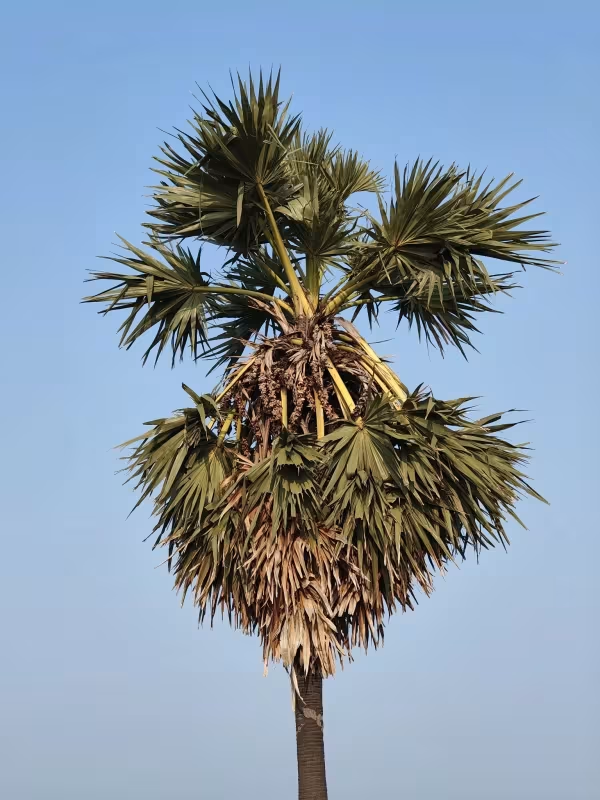
Description
Growing requirements
The Palmyra palm (Borassus flabellifer) is a prominent species in the Arecaceae family. It is native to tropical regions of South and Southeast Asia, where it has been cultivated for centuries.
This species thrives in hot tropical climates. It is highly drought-tolerant, making it an excellent crop for arid or semi-arid regions where other palms fail to establish.
The plant requires full sun exposure for optimal photosynthesis and growth. It is intolerant of shade, particularly during its sapling stage, which must be considered during plantation layout.
Deep, well-drained sandy or alluvial soils are preferred. While the palm can survive in poor soils, its development is significantly faster when provided with sufficient mineral content.
Agronomic management involves minimal interference once the tree is established, focusing primarily on weed control during the first two to three years of the palm's life.
Yield
The Palmyra palm is recognized as a multipurpose crop. Its most significant output is the sweet sap extracted from the inflorescences, which is boiled to produce jaggery or fermented into palm wine.
The fruit provides edible pulp and translucent seed kernels, which are consumed globally in various traditional recipes and modern health foods.
Leaves of the palm are harvested for thatching roofs, manufacturing baskets, fans, and mats, playing a vital role in local rural economies and cottage industries.
The timber obtained from mature trunks is extremely hard and durable, serving as a primary material for building pillars, beams, and artisanal woodworking.
- Production of palm sugar (jaggery).
- Edible fruit and endosperm consumption.
- Fiber and leaf harvesting for handicrafts.
Main diseases and pests
Pest pressure is primarily driven by palm weevils, which bore into the crown or trunk. These infestations are often fatal if not identified at an early stage.
Fungal infections can develop in the root zone if the soil remains waterlogged. Such conditions are detrimental and often lead to the decay of the root collar.
Improper tapping techniques for sap collection can cause physical injury to the plant, facilitating the entry of secondary pathogens that compromise the health of the inflorescence.
Stunted growth or chlorosis may occur due to micronutrient deficiencies in heavily degraded soils, which impacts the overall yield of both sap and fruit.
Integrated pest management, including regular inspection of the crown and maintaining clean cultivation practices, is essential for sustaining healthy Palmyra plantations.