
Patersonia occidentalis
Patersonia occidentalis R. Br.
Description
Growing requirements
Patersonia occidentalis, commonly known as the western native blue lily, is a perennial herbaceous plant belonging to the Iridaceae family. This species is native to southwestern Western Australia, where it thrives in a variety of environments, from sandy coastal plains to stony hillsides.
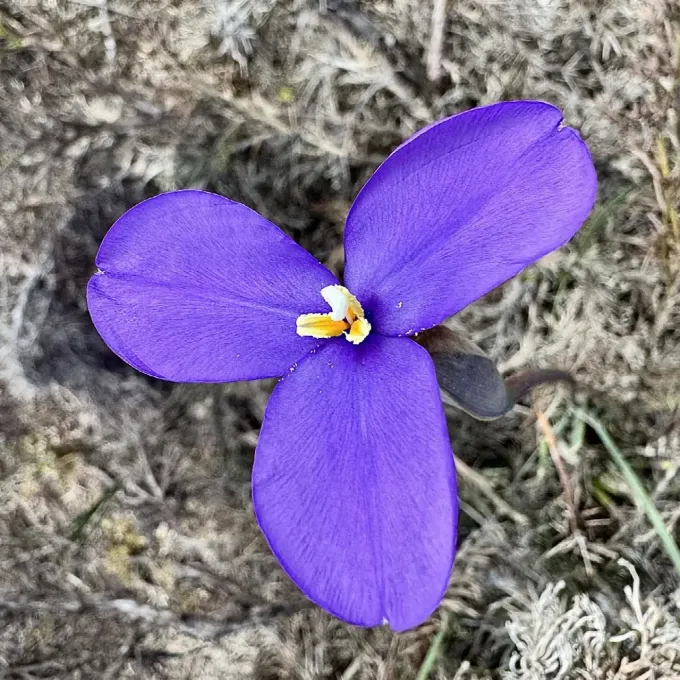
Botanically, it features grass-like leaves forming dense, tufted clusters. The distinct, bright violet-blue flowers emerge on firm stalks above the foliage. Although individual flowers are short-lived, the plant produces a continuous succession of blooms during its flowering season, providing significant visual appeal.
The cultivation of this species requires full sun exposure to thrive. While it can adapt to partial shade, maximum flowering potential is achieved in bright light. Soil conditions should be well-draining, as the species is highly susceptible to root rot if the roots are left in stagnant water for prolonged periods.
Climate requirements align with the Mediterranean climate zones, characterized by dry, hot summers and cool, wet winters. The plant is well-adapted to drought conditions, making it an excellent choice for xeriscaping or low-maintenance garden designs where water conservation is prioritized.
In landscape architecture and horticulture, Patersonia occidentalis is prized for its hardy nature and elegant, clump-forming habit. It is frequently utilized in rock gardens, native plant borders, and as a structural element in modern garden compositions that prioritize sustainability.
Main diseases and pests
The primary threats to the plant's health relate to inappropriate water management. Waterlogging is the most common cause of decline, leading to crown and root rot. Ensuring that the soil structure provides adequate aeration is the most effective preventative measure for any potential fungal infections.
Pest issues are generally minimal for this species. However, slugs and snails can occasionally graze on the succulent growth of young plants during damp weather. Maintaining a clean garden environment and using organic deterrents can prevent most infestations before they cause significant damage.