
Prumnopitys andina
Prumnopitys andina (Poepp. ex Endl.) de Laub.
Description
Sowing dates
Prumnopitys andina is primarily propagated through seeds, which require specific post-harvest treatment to break their physiological dormancy for successful germination.
Seeds should be collected from mature fruits, cleaned of pulp, and subjected to a period of cold stratification in a moist environment for at least three months.
Sowing should be performed in a well-draining, peat-based substrate. Maintaining consistent moisture levels while avoiding waterlogging is critical for seedling health.
Vegetative propagation via cuttings is possible but challenging, often requiring high-humidity chambers and the use of rooting hormones to ensure successful development.
Young seedlings grow slowly and require protection from intense direct sunlight and extreme temperatures, making container-grown propagation in nurseries the most viable method.
Growing requirements
Belonging to the Podocarpaceae family, this species is native to the temperate rainforests of the Andes, thriving in environments with high humidity and mild temperatures.
The tree requires fertile, humus-rich soil that is acidic to neutral in pH. Proper soil structure is essential to prevent root rot, as the species is highly sensitive to waterlogging.
It prefers a location with partial shade, especially during its younger years, and requires protection from cold, drying winds that can damage its evergreen foliage.
While tolerant of moderate frosts, P. andina is not fully hardy and may suffer damage during severe winter freezes in regions outside its natural habitat.
Regular irrigation is necessary to mimic the natural misty climate of its habitat, as the species does not cope well with prolonged summer drought conditions.
Yield
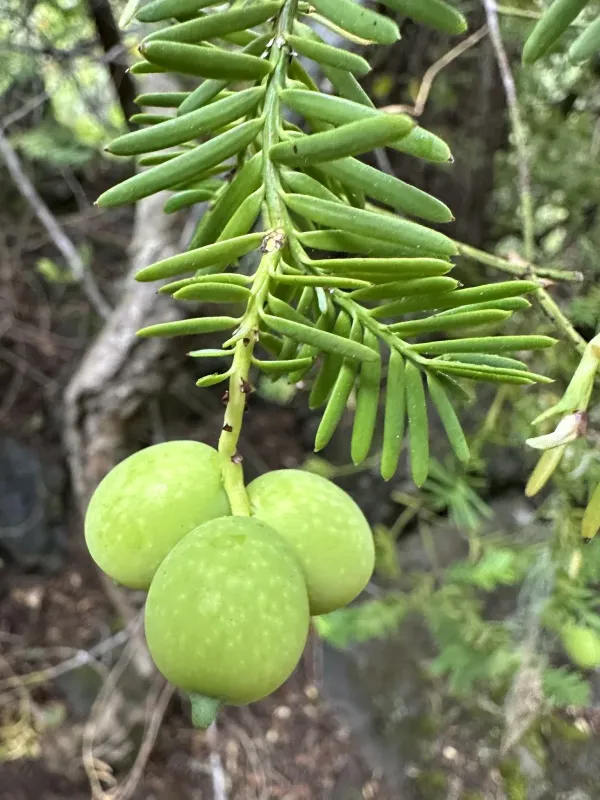
The yield of Prumnopitys andina consists primarily of its fleshy, yellowish-orange cones, which are edible and resemble small plums, giving the plant its common name.
Fruit production is generally late-maturing, with trees often taking decades to reach a reproductive state, which limits its use as a standard food crop.
The sweet, pulpy arils of the seeds are used locally for jams, syrups, and fresh consumption, contributing to its value as a specialty permaculture plant.
Beyond its culinary uses, the wood of P. andina is highly esteemed for its fine grain, durability, and resistance to decay, making it suitable for cabinetry.
Agricultural yield can be optimized in managed orchard settings by ensuring balanced nutrient input and adequate spacing to maximize tree crown development.
Main diseases and pests
Root rot caused by various fungal pathogens is the most significant threat, typically occurring in soils with poor drainage or during periods of excessive rainfall.
Insect pests such as scale insects and spider mites can attack the needles, particularly in sheltered or poorly ventilated environments where they can multiply rapidly.
Nutrient deficiencies, specifically iron or magnesium, can lead to chlorosis, manifesting as yellowing foliage that weakens the overall vitality of the tree.
Young trees are susceptible to bark damage from small mammals, necessitating mechanical protection for the lower trunk during the establishment phase.
A preventative integrated pest management approach, involving regular monitoring and sanitary pruning, is essential for maintaining the health of these slow-growing trees.