
Lovage
Levisticum officinale W. D. J. Koch
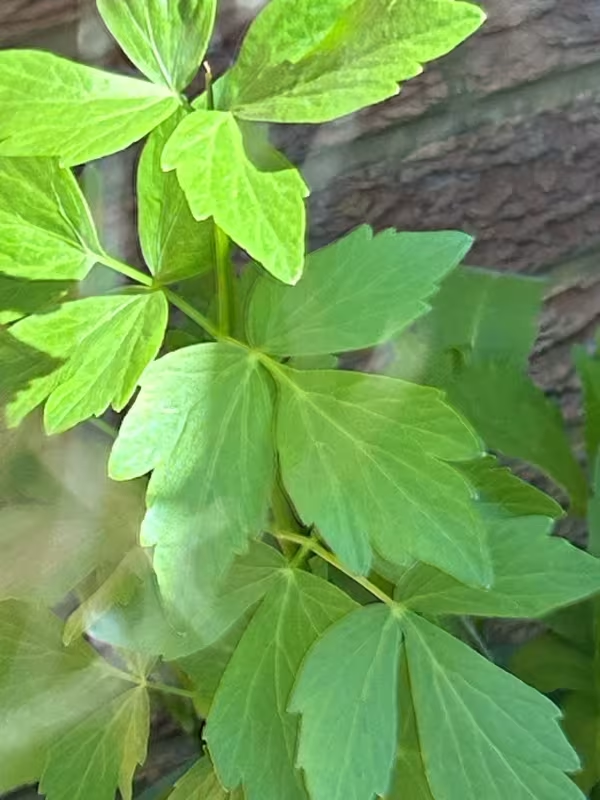
Description
Sowing dates
Lovage (Levisticum officinale) is a hardy perennial herb belonging to the Apiaceae family, well-known for its celery-like flavor and aroma.
Seeds should be sown in early spring or late autumn; they require a cold period to break dormancy and ensure high germination rates.
The seeds are small, so they should be sown shallowly, about 1-2 cm deep, in rows spaced 60–80 cm apart to allow for vigorous plant growth.
Germination is often slow and can take several weeks, so maintaining consistent soil moisture is crucial for the establishment of young plants.
For commercial cultivation, direct seeding is standard, though starting transplants in a greenhouse can help in weed management during the early growth phase.
Growing requirements
Lovage thrives in deep, fertile, moisture-retentive, yet well-drained loamy soils with a pH ranging between 6.0 and 7.0.
The plant prefers sunny locations but is quite tolerant of partial shade, which makes it versatile for various cropping systems.
It is exceptionally frost-hardy and can withstand harsh winters, re-sprouting vigorously each spring from its robust rootstock.
Adequate nitrogen supply is necessary to promote the lush foliage growth that characterizes this high-yielding herb.
Regular irrigation is vital during dry periods, as water stress can lead to premature bolting and a decrease in the quality of the leaves.
Yield
Productivity is highest from the second year onwards; the plant produces significant amounts of fresh biomass throughout the growing season.
Root yields are substantial by the third year, as the plant develops large, branched roots that are prized for culinary and medicinal extracts.
To maximize yields, it is recommended to cut back the flowering stems, which redirects the plant's energy toward leaf and root development.
Properly maintained plantings can be harvested for many years, providing a consistent income for small and medium-scale producers.
The total yield of fresh leaves can vary, but with intensive farming practices, it remains one of the most productive perennial herbs.
Main diseases and pests
Leaf spot caused by Septoria is the most common fungal disease, which can be mitigated by ensuring good air circulation and avoiding overhead watering.
Powdery mildew may occur in stagnant, humid conditions, making regular monitoring and appropriate spacing of plants essential for disease control.
Pests like aphids can be a nuisance, particularly on young tender foliage, and should be managed with integrated pest control methods.
Root-feeding insects can occasionally cause damage to the mature rootstock, necessitating good field sanitation and proper crop rotation practices.
Preventive measures such as planting in well-ventilated areas and avoiding over-fertilization are key to maintaining a healthy crop.
Harvesting
Leaves are harvested throughout the growing season as needed, typically by picking individual stems rather than cutting the entire plant down.
Roots are harvested in the autumn of the third year, after the plant has gone dormant, to ensure the highest concentration of volatile oils.
Processing involves thorough washing, slicing, and gentle drying in climate-controlled environments to preserve the delicate aroma profile.
Dried leaves should be stored in airtight containers away from direct sunlight to maintain their potent flavor for several months.
Proper harvest timing ensures the best quality product for both fresh market sales and the production of dried herbs or roots.