
Litwinowia tenuissima
Litwinowia tenuissima
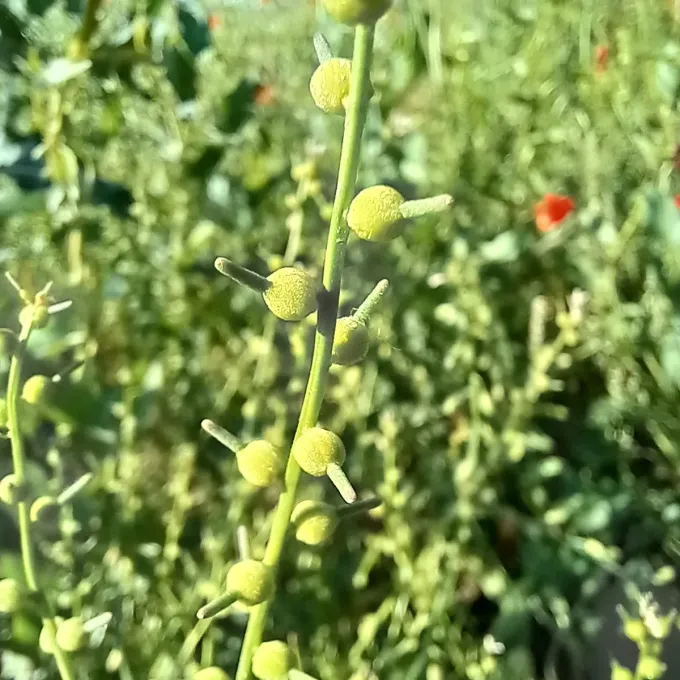
Description
Sowing dates
Litwinowia tenuissima is an annual herbaceous plant belonging to the Brassicaceae family. Naturally adapted to arid and semi-arid environments, it displays resilience against extreme environmental stressors found in its native habitat.
The plant completes its life cycle quickly, taking advantage of the early spring moisture typical of its distribution area. Understanding its phenological stages is crucial for planning agricultural activities effectively.
Sowing should be performed in early spring when the soil retains sufficient moisture for seed germination. Precise depth control, usually between 1 and 2 centimeters, ensures uniform emergence across the field.
Preparation of the seedbed involves creating a fine tilth that allows for good contact between the soil and the small seeds. Consistent moisture levels during the first weeks are key to establishing a healthy crop.
The establishment phase requires careful management to ensure the seedlings are not overwhelmed by weeds. Providing a weed-free environment during the first developmental stages significantly boosts the plant's growth potential.
Growing requirements
Litwinowia tenuissima demands high light intensity and is intolerant of shading. The plant is well-suited for open, arid landscapes where other conventional crops might struggle to survive due to water limitations.
Light, well-draining soils with excellent aeration are essential for successful cultivation. Avoiding heavy clay soils that retain excessive moisture is critical to preventing root issues and promoting optimal plant development.
The ideal soil pH is neutral or slightly alkaline, reflecting the plant's natural adaptation to desert-like conditions. Soil fertility should be managed through balanced nutrient application to avoid excessive nitrogen, which can compromise plant strength.
Climate adaptability is one of the key strengths of this species, allowing it to withstand high temperatures. Adequate airflow around the plants helps in maintaining a healthy canopy and reducing the risk of heat stress.
Maintaining proper spacing between plants is essential to manage water competition. Even in arid zones, plants spaced correctly will show significantly higher vitality and better production of reproductive organs.
Yield
The main agricultural interest in Litwinowia tenuissima lies in its seed oil content, which shows potential for industrial or nutritional use. Yields are currently limited but show promising growth under optimized agronomic conditions.
Plant productivity is heavily dependent on precipitation patterns and moisture availability during the critical flowering phase. Improving genetic traits through selection could lead to higher yield stability across diverse climates.
Harvesting efficiency is directly linked to the plant's ability to retain seeds in the pods. Developing harvest-ready varieties that minimize shattering is a primary goal for ongoing research and development in this crop.
Nutrient management focusing on phosphorus and potassium helps in enhancing overall seed quality and weight. Monitoring these levels ensures that the plant has the resources needed to reach its full productive capacity.
Field trials conducted under controlled conditions have provided insights into the potential for scaling production. Consistent agronomic practices ensure that the crop performs reliably throughout the growing season.
Main diseases and pests
Crucifer flea beetles are the most common pests that can decimate young seedlings if not managed. Early detection and targeted treatment are vital for maintaining an adequate plant population in the field.
Fungal pathogens such as Alternaria may develop if environmental conditions become overly humid during the late stages of growth. Proper crop rotation and field sanitation are effective preventative measures against such outbreaks.
Pest pressure from lepidopteran larvae can impact leaf biomass, necessitating regular field scouting. Utilizing integrated pest management (IPM) strategies minimizes reliance on chemicals while maintaining effective control.
Soil-borne nematodes can pose a threat to the root system, particularly in fields with intensive cropping history. Ensuring long-term crop rotation cycles helps disrupt the lifecycle of these harmful soil organisms.
The plant’s inherent resilience provides a level of natural defense against many common diseases. Combining this trait with sound cultural practices results in a robust and healthy agricultural production system.
Harvesting
Harvesting is performed when the pods show clear signs of maturity, typically indicated by a color change to light brown. Timing is critical to prevent loss due to the pods shattering and dropping seeds prematurely.
Mechanized harvesting with correctly adjusted combine harvesters is standard practice for this crop. Adjusting the drum speed and concave clearance prevents damage to the small seeds, preserving their quality.
Post-harvest cleaning is essential to remove chaff, dust, and other impurities from the seed mass. Once cleaned, the seeds must be dried properly to reach a moisture level suitable for safe long-term storage.
Storage facilities should remain cool, dry, and well-ventilated to prevent the growth of mold or degradation of the oil content. Monitoring the storage environment helps ensure the viability of seeds for future use.
Efficient logistics and transport are necessary for moving the harvested product to processing facilities without unnecessary delays. Proper planning at every stage of the harvest ensures high-quality output for commercial markets.