
Lithomyrtus retusa
Lithomyrtus retusa
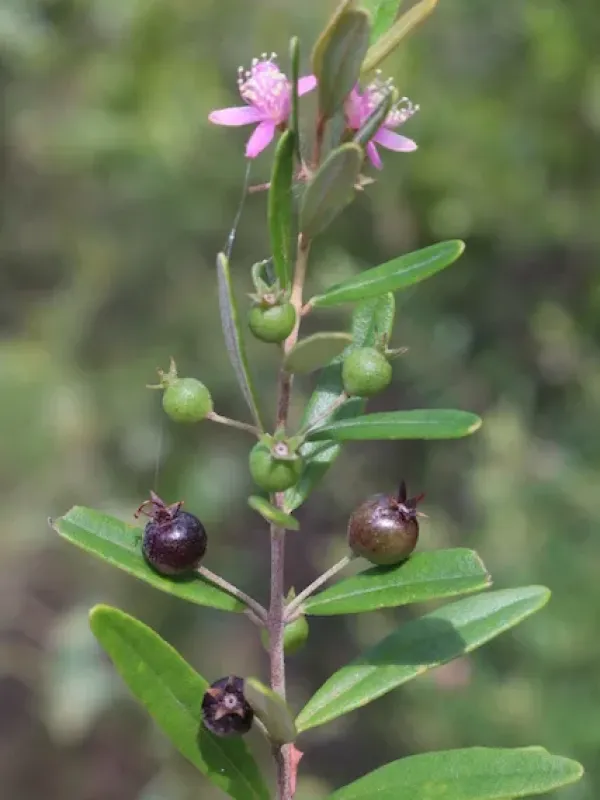
Description
Growing requirements
Lithomyrtus retusa is a distinctive shrub belonging to the Myrtaceae family. Native to the northern regions of Australia, this species typically inhabits coastal heaths and tropical rainforest edges where environmental conditions remain relatively stable throughout the year.
The plant thrives in well-drained, acidic sandy soils. It is highly sensitive to soil compaction and waterlogging, which can cause significant root stress. Ensuring adequate aeration of the growing medium is essential for long-term health and vigorous development.
Climatically, the species requires a tropical environment with warm temperatures and high humidity. It does not tolerate frost or cold temperatures, meaning that in temperate regions, it must be grown in specialized glasshouses or climate-controlled environments.
For optimal growth, it prefers bright, filtered sunlight. While it can adapt to partial shade, full exposure to intense direct light in arid conditions may result in leaf scorch, necessitating consistent moisture management and potential shading.
Horticultural management focuses on mimicking natural light and moisture regimes. Consistent watering, combined with a nutrient-balanced substrate, supports the plant's structural integrity and its characteristic retuse leaf shape, which gives the species its botanical name.
Main diseases and pests
The primary threats to Lithomyrtus retusa include fungal infections, particularly those affecting the root system. Phytophthora and other soil-borne pathogens are common issues if drainage is inadequate and water remains stagnant around the base.
Pest management is focused on common sap-sucking insects. Scale insects and mealybugs can pose a severe threat by colonizing stem nodes and underside of leaves, eventually weakening the shrub’s immunity and growth rate.
Spider mites are a major concern in indoor cultivation or low-humidity environments. These mites reproduce rapidly in dry air, leading to yellowing of foliage and eventual leaf drop if intervention with appropriate horticultural soaps or miticides is delayed.
Aphids may target new tender growth during the peak of the growing season. Early detection through regular monitoring allows for physical removal or targeted biological control, preserving the appearance and health of the plant.
To prevent disease outbreaks, strict sanitation practices should be followed when pruning or transplanting. Using sterilized tools and avoiding overhead irrigation in enclosed spaces helps mitigate the spread of spores and bacterial infections.