
Syrian Lisaea
Lisaea syriaca
Description
Growing requirements
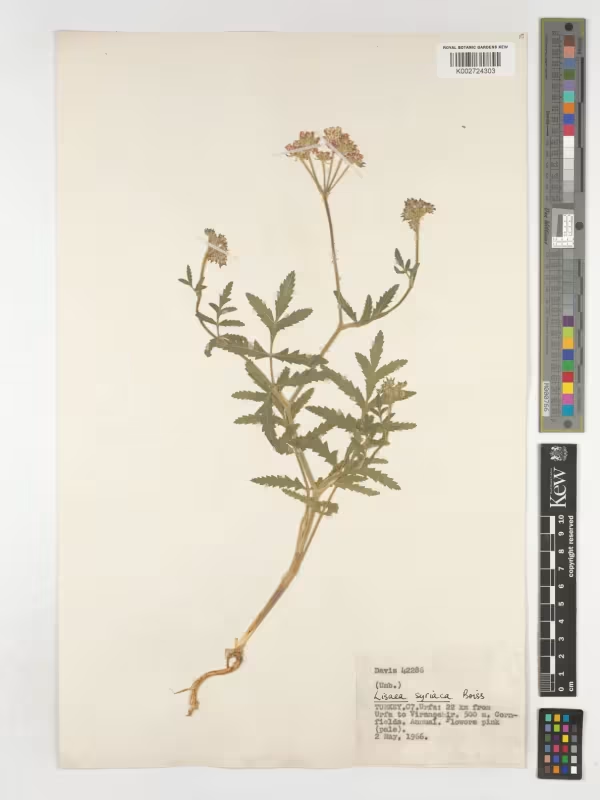
Syrian Lisaea (Lisaea syriaca) is an annual herbaceous plant belonging to the Apiaceae (parsley) family. It is a rare botanical species native to the Middle East and Mediterranean regions, often found in natural grasslands and disturbed habitats.
The plant requires well-drained, sandy or loamy soils to thrive. It performs best in environments with plenty of sunlight and moderate temperatures, as excessive soil moisture can lead to root degradation and developmental issues.
In terms of climatic adaptation, Lisaea syriaca is recognized for its relative drought tolerance, which is a common trait among plants originating from semi-arid zones. It does not require high levels of intensive fertilization compared to traditional commodity crops.
Botanically, it exhibits the typical structure of the carrot family, featuring umbrella-shaped inflorescences and finely divided foliage. The plant completes its life cycle within a single season, producing seeds that are adapted for dispersal by wind or water.
Current agricultural interest in Syrian Lisaea is primarily academic and experimental, exploring its potential as a specialized fodder source or a provider of unique essential oils that may have applications in natural agricultural and industrial chemistry.