
Mountain sand lily
Leucocrinum montanum
Description
Sowing dates
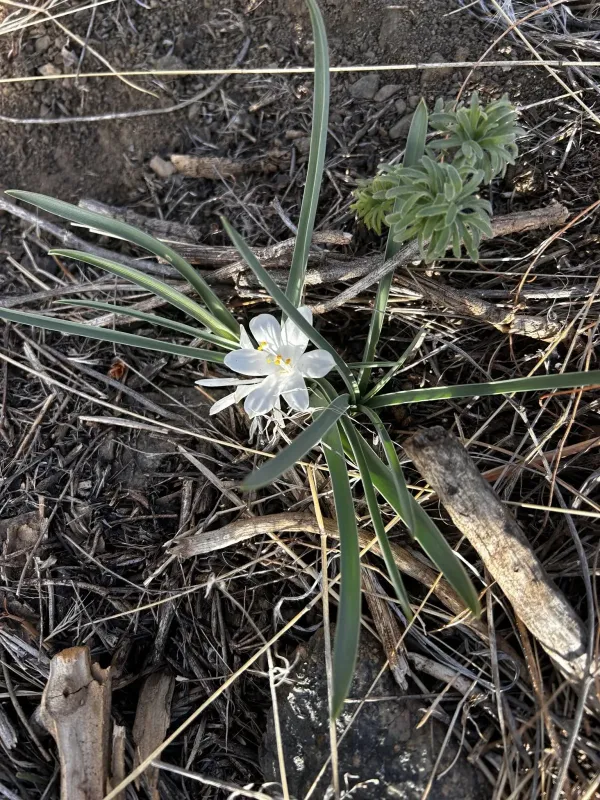
Mountain sand lily (Leucocrinum montanum) is a perennial herbaceous plant belonging to the Asparagaceae family. It is known for its stemless appearance where fragrant white flowers emerge directly from the crown.
Propagation is typically achieved through seeds, which require a cold stratification period to break dormancy. Sowing should be done in late autumn to ensure exposure to winter freezing cycles.
Vegetative division of the thick, fleshy root system is possible but should be performed with extreme care. The best time for this operation is early spring, just before the first leaves emerge.
When planting, ensure that the crown is placed just below the soil surface. Improper depth can lead to stunted growth or failure to bloom in the following season.
Adequate space is required for the roots to expand. A spacing of at least 20 cm between plants helps maintain soil aeration and reduces the risk of root overcrowding.
Growing requirements
The native range of Leucocrinum montanum extends across the western United States, primarily in open, dry, and rocky habitats. It is perfectly adapted to climates with distinct dry and wet cycles.
Soil requirements are strict: the medium must be highly porous and well-draining. Sandy or gritty soils with a neutral pH are ideal to prevent water retention around the sensitive roots.
The plant thrives in full sun exposure. Shaded locations will result in elongated, weak leaves and a lack of flower production, significantly reducing the plant's decorative value.
Water management is critical. The plant requires moisture during its spring active growth phase but needs to be kept in a completely dry, dormant state during the hot summer months.
No special fertilization is needed for this species. It is well-adapted to nutrient-poor soils, and excessive mineral input can weaken the plant's natural resistance to environmental stress.
Main diseases and pests
Root rot is the most common threat to the mountain sand lily. This condition is triggered by poor drainage and excessive watering, especially when the soil remains cold and damp for too long.
Fungal infections can also occur if the humidity levels around the foliage are too high. Proper air circulation is essential to mitigate the risk of leaf spot diseases.
Insects like wireworms or soil-dwelling larvae may attack the fleshy rootstock, potentially causing the plant to wither and collapse during the growing season.
Voles and other small rodents sometimes forage on the underground parts of the plant, especially if the soil is loose and easy to burrow through.
Effective pest and disease management relies on cultural practices: providing excellent drainage, removing dead plant matter, and ensuring a dry summer dormancy period.