
Giant taro
Leucocasia gigantea (Blume) Schott
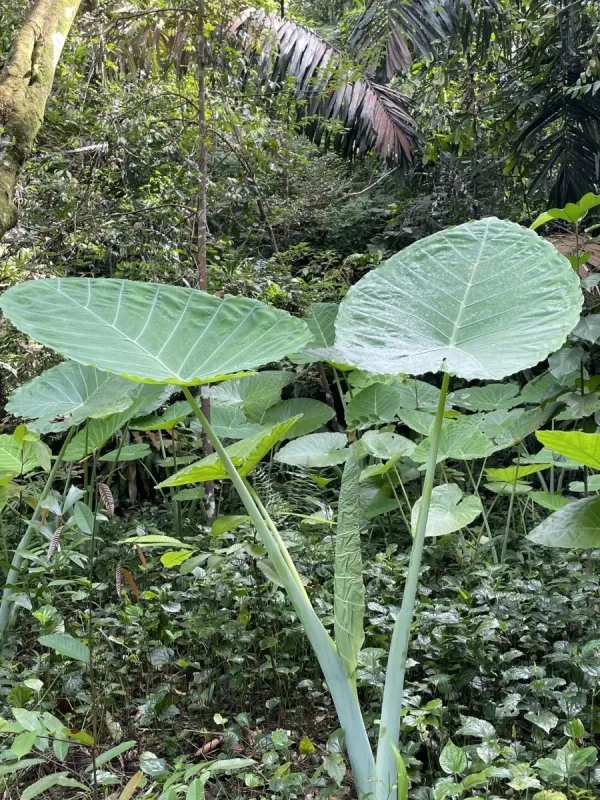
Description
Sowing dates
Giant taro (Leucocasia gigantea) is a robust perennial herb belonging to the Araceae family. This crop is primarily propagated through vegetative means, using corms or rootstock division to ensure consistency in the quality of the new generation plants.
Planting takes place in well-warmed soil, ideally when temperatures exceed +20°C. In tropical climates, the start of the rainy season is the optimal time for establishing new plantations, as it ensures adequate moisture for rapid initial growth.
The planting depth typically ranges from 10 to 15 centimeters. It is essential to maintain sufficient spacing between plants to accommodate the large, sprawling leaf canopy that develops as the plant reaches maturity.
Successful establishment relies on keeping the root zone consistently moist but well-drained. In large-scale operations, mechanical planting is often adapted to accommodate the size and shape of the corms, ensuring they are placed securely in the earth.
Young plants are sensitive to sudden environmental changes, so careful land preparation is required. Incorporating organic matter before planting provides the necessary nutrients for the initial vegetative phase, setting the foundation for high productivity.
Growing requirements
Giant taro thrives in fertile, well-draining soils rich in organic matter. Loamy or alluvial soils are preferred, as they balance water retention with the necessary aeration required for the healthy development of tuberous roots.
The crop demands a tropical climate with optimal temperatures ranging between +25°C and +32°C. Exposure to temperatures below +10°C can significantly stunt growth, and frost conditions will result in the total destruction of above-ground foliage.
Light intensity is important; however, direct, harsh sunlight can scorch the broad leaf surfaces. Therefore, cultivation in areas with dappled light or light afternoon shading is often more successful for maintaining leaf health.
Water availability is the most critical growth factor. The plant is highly water-demanding and is frequently grown in areas with high annual rainfall or near water bodies where irrigation can be managed efficiently throughout the cycle.
Nutrient management focuses on nitrogen during the active leafy growth phase to maximize biomass, followed by potassium and phosphorus application during the tuber expansion period to improve final yield and storage quality.
Yield
The economic value of Giant taro lies in its large, starch-rich corms and edible leaf stalks. Agricultural yields vary based on planting density, soil fertility, and the efficiency of the irrigation systems applied throughout the season.
Harvesting is typically scheduled once the plant ceases active growth and leaves begin to yellow. This timing ensures that the tubers have reached their maximum size and energy accumulation before the dormant phase sets in.
Quality control is essential for marketable yields. Tubers must be free from mechanical damage, as wounds are primary entry points for pathogens. Proper handling during harvest and cleaning significantly increases the shelf life of the final product.
The use of improved agricultural practices, such as mulching and controlled fertilizer placement, has been shown to increase the yield per hectare. These techniques help stabilize soil moisture and suppress weed growth, reducing labor costs.
Beyond traditional culinary uses, there is potential for processing the corms into starch-based products. This requires thorough cooking to remove oxalates, making the plant a versatile and safe food source when handled correctly.
Main diseases and pests
Fungal diseases, particularly corm and stem rots caused by Pythium and Phytophthora, pose the greatest threat to commercial plantations. These pathogens thrive in waterlogged conditions and spread rapidly in dense, poorly ventilated crops.
Pests such as aphids, mites, and thrips are common occurrences, feeding on the succulent undersides of the leaves. These pests not only reduce plant vigor but can also transmit viral infections that limit the overall lifespan of the plantation.
- Implementing strict crop rotation protocols.
- Sanitizing tools to prevent the spread of soil-borne pathogens.
- Removing diseased foliage to improve airflow and microclimate.
- Applying preventive biological control methods.
- Ensuring adequate field drainage to avoid stagnant water.
Integrated Pest Management (IPM) is recommended to balance productivity with ecological sustainability. Monitoring fields regularly allows for early detection of problems, enabling targeted interventions before infections reach epidemic levels.
Harvesting
Harvesting is a manual process requiring careful extraction of the corms from the soil. The fragile nature of the tissues means that any rough handling can cause bruising, which significantly lowers the commercial value of the crop.
After removal, the corms are cleaned of soil and debris. This process is ideally carried out under dry weather conditions to avoid introducing moisture that could foster decay during storage or transportation to regional processing centers.
Drying the corms in a shaded, well-ventilated area for several days helps to harden the skin and reduce the moisture content of the outer layers. This step is critical for preventing fungal growth during the initial storage period.
Storage requires cool, dry conditions with constant airflow. Placing tubers in single layers or breathable mesh containers prevents heating and moisture buildup, both of which are major drivers of spoilage in harvested Araceae.
Regular inspections of stored stocks are necessary to identify any early signs of rot. Removing affected corms promptly prevents the loss of adjacent healthy stock, ensuring maximum returns from the harvested volume.