
Leuchtenbergia principis
Leuchtenbergia principis
Description
Sowing dates
Propagation of Leuchtenbergia principis is primarily achieved through seeds, which should be sown during the spring months to benefit from rising temperatures.
The seeding substrate must be extremely porous, composed mostly of mineral materials like pumice or coarse sand to ensure perfect drainage for delicate seedlings.
Maintain a constant temperature of at least 22 degrees Celsius to facilitate germination, and use a glass cover to maintain consistent humidity until sprouting.
Young seedlings are highly vulnerable to drying out and should be misted carefully, transitioning to a drier regime only as they mature over several months.
Providing bright indirect light is crucial during the initial stages to prevent etiolation, which can permanently deform the slow-growing plants.
Growing requirements
Leuchtenbergia principis is a unique monotypic genus belonging to the Cactaceae family, natively found in the high-altitude deserts of northern and central Mexico.
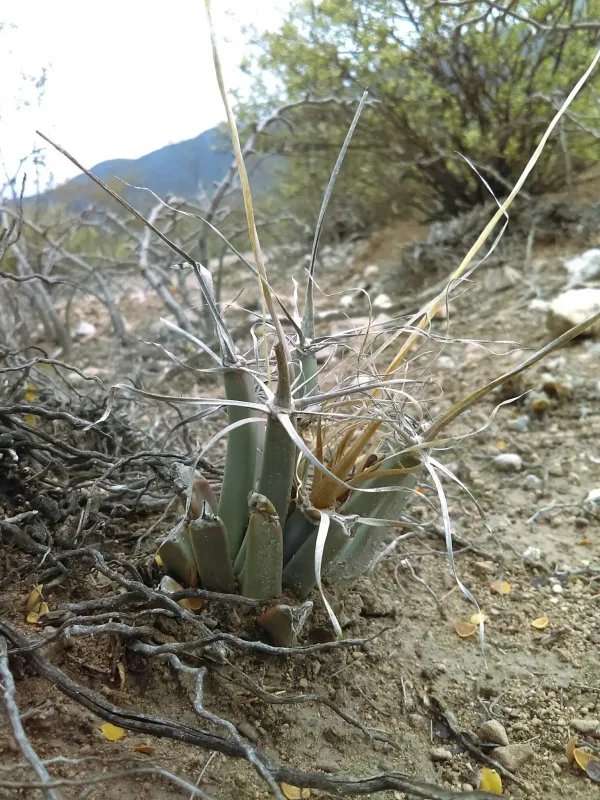
This succulent is characterized by its long, triangular tubercles that give it a superficial resemblance to an agave, making it a prized specimen for collectors.
Optimal growth requires high light intensity; full sun is necessary to keep the plant compact and to encourage the development of its signature papery spines.
The soil profile must be strictly inorganic, with a high proportion of mineral elements, ensuring that the heavy taproot never remains in damp, stagnant soil.
During winter dormancy, the plant must be kept completely dry in a cool environment, with temperatures ranging from 10 to 15 degrees Celsius to trigger flowering.
Main diseases and pests
Root rot is the most frequent cause of mortality in Leuchtenbergia principis, often triggered by over-watering during periods of low light or dormancy.
Mealybugs are the most common pests, tending to settle in the deep crevices between the tubercles where they can remain unnoticed until an infestation is severe.
Red spider mites may attack the plant in low-humidity conditions, causing localized yellowing and unsightly brown patches on the surface of the tubercles.
Root-knot nematodes can also be an issue, causing systemic weakness and stunting the growth of the plant, often requiring the use of specialized soil treatments.
- Applying contact insecticides for localized pest control.
- Implementing strict irrigation discipline to prevent rot.
- Ensuring adequate airflow around the plant to minimize humidity-related risks.