
Leptothrium senegalense
Leptothrium senegalense
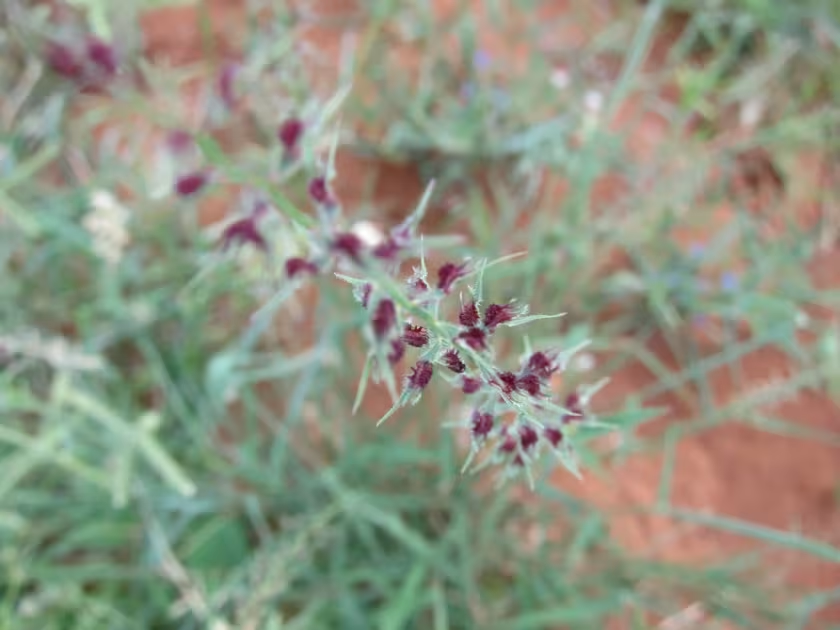
Description
Growing requirements
Leptothrium senegalense is an annual grass species belonging to the Poaceae family. Native to the arid and semi-arid regions of Africa, particularly the Sahel zone, this plant is remarkably adapted to harsh environmental conditions and scarce water availability.
The plant thrives primarily on sandy, dry soils and is often found in degraded landscapes where vegetation cover is sparse. Its role in soil stabilization is significant, as it helps bind loose sand particles, thus mitigating wind erosion in desertified territories.
Climatic requirements for this grass include high solar radiation and extreme heat. It is a true xerophyte that has evolved to complete its life cycle rapidly during the short rainy season, maximizing the utilization of available soil moisture.
Botanical traits include a compact growth habit and tough stems that protect the plant from heat stress. The physiological mechanisms of this grass allow it to withstand prolonged dry spells while maintaining its biological integrity and producing viable seeds.
In terms of agricultural use, Leptothrium senegalense serves as a vital forage resource for nomadic pastoralists. It is particularly valued as a source of pasture for camels, goats, and sheep, which graze on this vegetation when more palatable grasses are unavailable due to drought.