
Leptocoryphium lanatum
Leptocoryphium lanatum
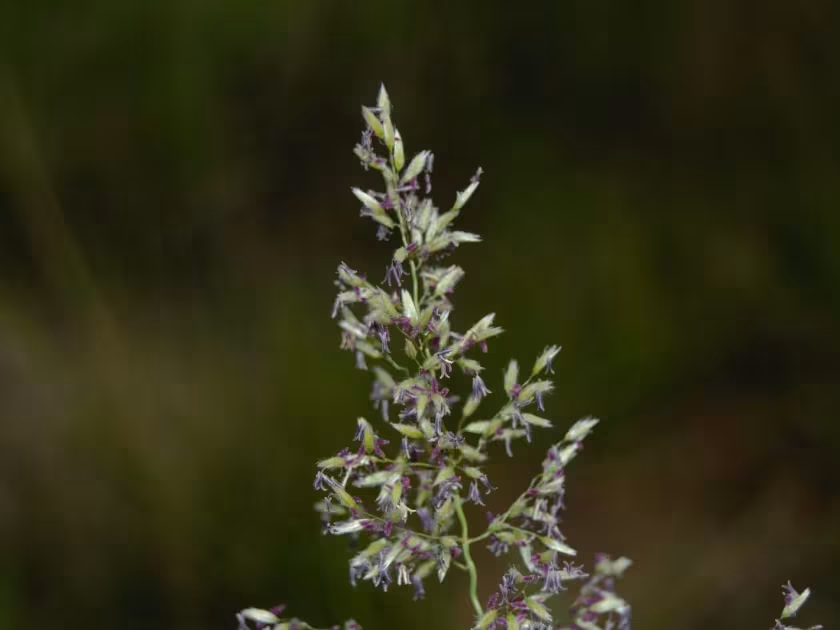
Description
Growing requirements
Leptocoryphium lanatum is a perennial grass belonging to the Poaceae family. Native to tropical and subtropical areas of the Americas, it is widely recognized as a resilient component of savannah ecosystems.
The species thrives in well-drained, sandy, or rocky soils, demonstrating high tolerance for nutrient-poor substrates. It is particularly valued in regions where extreme weather conditions prevent the growth of more sensitive forage species.
Botanically, it forms dense tufts with narrow, linear leaves characterized by a fine, woolly pubescence. This physical adaptation helps the plant regulate transpiration rates under the intense heat of its natural habitat.
Climatic requirements focus on high light availability and consistent temperatures. The plant is not frost-tolerant and requires a frost-free growing season to reach its full productive potential as a forage resource.
In agricultural settings, it is utilized primarily for grazing livestock. It provides a stable ground cover that protects soil from erosion while offering a reliable, albeit moderate, source of forage for cattle in arid grazing lands.
Main diseases and pests
The primary diseases affecting Leptocoryphium lanatum include various rust fungi that thrive in humid environments. Management involves ensuring proper air circulation and avoiding overstocking of the grazing areas.
Insect pests such as grasshoppers and other chewing insects can cause significant damage to the leaf biomass. Integrated pest management strategies rely on natural predators and controlled rotation to limit population explosions.
Competition from invasive broadleaf weeds remains a major challenge. If the stand density drops, these invaders can quickly displace the grass, leading to a degradation of the overall pasture quality.
Soil-borne pathogens can be a threat in waterlogged areas. Poor drainage significantly increases the risk of root rot, which can kill large patches of the grass within a single growing season.
Effective pasture management requires a balance between grazing intensity and recovery time. Overgrazing weakens the root systems, making the population more susceptible to both abiotic stress and pest infestations.