
Leptocarpus disjunctus
Leptocarpus disjunctus
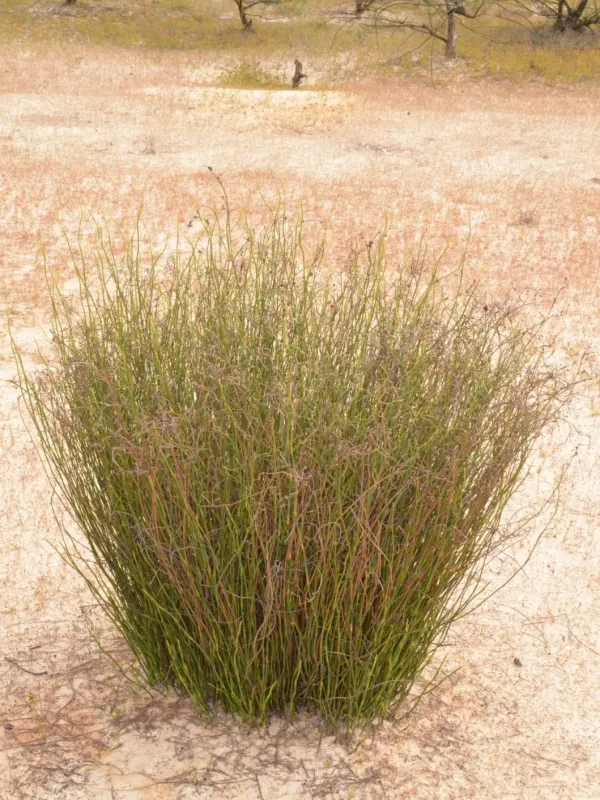
Description
Growing requirements
Leptocarpus disjunctus is a perennial member of the Restionaceae family, native to the coastal regions of Australia. This plant is well-adapted to surviving in harsh, sandy environments, making it a robust addition to specific landscapes.
Botanically, it features stiff, reed-like culms that arise from spreading rhizomes. The plant displays a minimalist, architectural silhouette that remains attractive throughout the changing seasons, providing structure to garden borders.
Cultivation requires well-draining sandy soil to mimic its natural habitat. It thrives in full sun, which is essential for maintaining the plant's structural integrity and preventing the growth of fungal pathogens in stagnant moisture.
Regarding climate needs, it is suited for regions with mild winters and dry, sunny summers. It displays a high degree of salt tolerance, allowing it to be planted in coastal garden sites where other grasses might fail.
Agrotechnical management focuses on minimal disturbance. Annual cleaning of dead foliage is recommended in late winter or early spring to clear space for new growth. Propagation is successfully achieved through the careful division of the rhizomatous root system.
Harvesting
The primary use for Leptocarpus disjunctus is in sustainable and low-maintenance landscape design. Its ability to stabilize loose, sandy soils makes it a functional choice for erosion control in coastal areas or rock gardens.
In ornamental horticulture, it is highly valued for its texture and ability to create a natural, wild-looking effect without requiring significant inputs of water or chemical fertilizers once established.